

The iPhone 16 and iPhone 14 are aimed at different users. The iPhone 16 makes its case with up to 22 hours of video playback and stronger rear camera flexibility, while the iPhone 14 is the stronger fit if you care more about a lower real-world price and a more budget-friendly deal.
In this comparison, we break down the key differences in price, design, display, performance, cameras, battery life, software features, and overall value.
TL;DR: The iPhone 16 makes the stronger case for value with up to 22 hours of video playback and stronger rear camera flexibility, while the iPhone 14 pulls ahead if you specifically want the main hardware upgrades that separate it from the cheaper model.
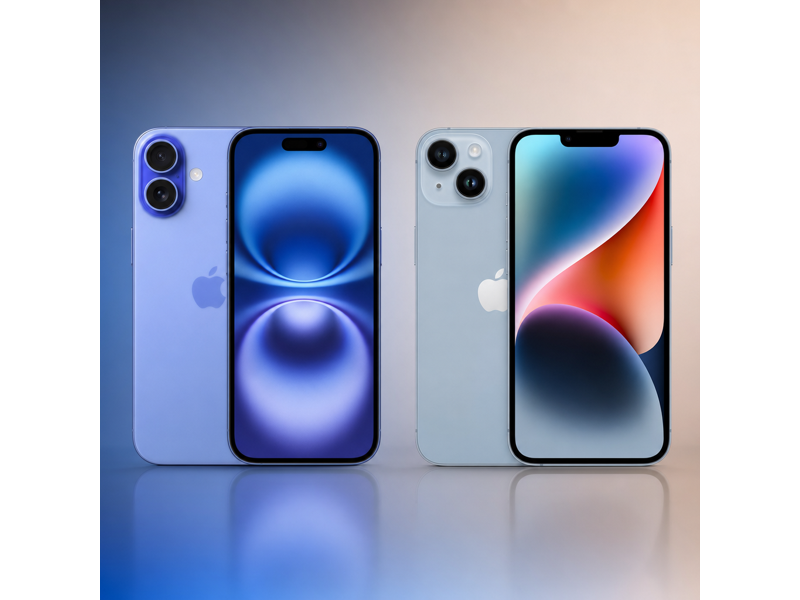
iPhone 16 vs iPhone 14 Specs Table
If you want a quick overview before diving into the details, the table below highlights the most important differences between the iPhone 16 and iPhone 14. The main tradeoff here is simple: the iPhone 16 is easier to justify on value, while the iPhone 14 offers the hardware upgrades that separate it from the cheaper model.
| Specifications | iPhone 16 | iPhone 14 |
|---|---|---|
| Starting Price | $799 | $799 |
| Dimensions | 5.81 x 2.82 x 0.31 in | 5.78 x 2.82 x 0.31 in |
| Weight | 170 g | 172 g |
| Processor | A18 | A15 Bionic |
| Storage | 128GB, 256GB, 512GB | 128GB, 256GB, 512GB |
| Display | 6.1 in (Super Retina XDR OLED) | 6.1 in (Super Retina XDR OLED) |
| Resolution | 2556 x 1179 | 2532 x 1170 |
| Connectivity | 5G, Wi-Fi 7, Bluetooth 5.3, Thread, NFC, Ultra Wideband | 5G, Wi-Fi 6, Bluetooth 5.3, NFC, Ultra Wideband |
| Rear Cameras | 48MP Main, 12MP Ultra Wide | Dual 12MP camera system |
| Front Camera | 12MP TrueDepth | 12MP TrueDepth |
| Battery | Up to 22 hours video playback | Up to 20 hours video playback |
| USB | USB 2 | Lightning USB 2 |
| Colors | Ultramarine, Teal, Pink, White, Black | Blue, Midnight, Purple, Starlight, (PRODUCT)RED, Yellow |
iPhone 16 vs iPhone 14: Price
The iPhone 16 starts at $799, while the iPhone 14 starts at $799. That means there is no launch price gap between them before any storage upgrades. In this situation, the decision comes down more directly to whether the premium hardware differences are worth prioritizing for your use. What separates them instead is the hardware upgrades that separate it from the lower-priced option, along with any later spend that comes from moving up storage tiers or choosing the configuration that best fits your needs.
If those verified advantages match your priorities, the higher-spec option can still be justified. If not, the model that makes more sense is the one whose strengths line up better with your day-to-day needs.
 Winner: iPhone 16
iPhone 16 vs iPhone 14: Design
Both phones follow Apple's familiar design language, but the real differences are not always about tiny millimeter-level size changes. The iPhone 16 measures 5.81 x 2.82 x 0.31 in and weighs 170 g, while the iPhone 14 comes in at 5.78 x 2.82 x 0.31 in and 172 g. That affects how the phones feel in hand, but design value also comes from hardware touches and layout decisions, not just raw dimensions.
If design is one of your top priorities, the iPhone 14 has the stronger case here because it offers a more compact footprint or a thinner and lighter build.
Winner: iPhone 14iPhone 16 vs iPhone 14: Display
The iPhone 16 uses a 6.1 in Super Retina XDR OLED display with 2556 x 1179 resolution, while the iPhone 14 uses a 6.1 in Super Retina XDR OLED display with 2532 x 1170 resolution. The main display experience should feel very close because the practical screen advantages are balanced rather than one-sided.
Winner: TieiPhone 16 vs iPhone 14: Performance
The iPhone 16 uses the A18 with Apple 5-core GPU while the iPhone 14 uses the A15 Bionic with Apple 5-core GPU. That creates a real performance distinction because one phone uses the newer or stronger chip generation. In day-to-day use, both phones should feel fast, but the stronger chip has more headroom for heavier editing, gaming, and long-term performance demands.
If you mainly care about getting the highest performance tier available in this comparison, the iPhone 16 wins. If your use is mostly social apps, photos, messaging, and streaming, the iPhone 14 may still be more than enough.
Winner: iPhone 16iPhone 16 vs iPhone 14: Camera
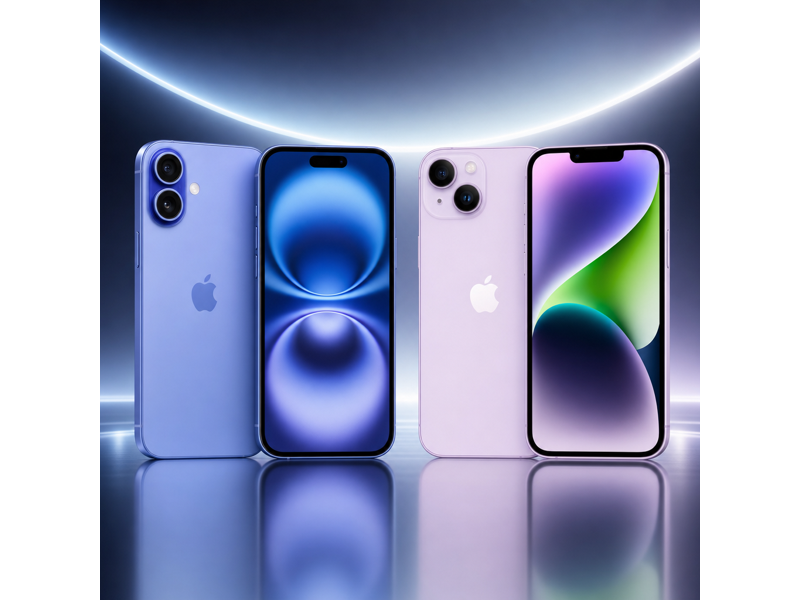
The iPhone 16 uses 48MP Main, 12MP Ultra Wide, while the iPhone 14 uses Dual 12MP camera system. The iPhone 16 has the stronger rear camera setup thanks to its stronger rear camera hardware and broader shooting flexibility, while the iPhone 14 is more limited on rear-camera versatility.
Both phones use 12MP TrueDepth on the front, so selfie and video-call hardware should feel broadly similar. If camera matters more than price or size in your buying decision, focus on which of these verified camera advantages lines up with how you actually shoot, call, and transfer footage.
 Winner: iPhone 16
iPhone 16 vs iPhone 14: Battery
The iPhone 16 is rated for up to 22 hours of video playback, while the iPhone 14 is rated for up to 20 hours. That creates a 2-hour gap in Apple's quoted video playback figures, which can matter for travel, streaming, navigation, gaming, and longer days away from a charger.
If you want the phone with the strongest endurance, the iPhone 16 is the safer pick. If the lower number is already enough for a full day of your normal use, paying more for extra battery may not be necessary.
Winner: iPhone 16iPhone 16 vs iPhone 14: Software, Storage, and Features
From a software, storage, and workflow perspective, this category is very close. Both phones offer USB 2 and both top out at 512GB of storage, so neither has a clear storage or wired-transfer advantage.
Day-to-day software use should feel broadly similar on both phones, so this section should not be the deciding factor unless another verified workflow feature matters to you.
Winner: TieSwitching to a New Phone? Use MobileTrans to Transfer Your Data ⭐
If you are upgrading between iPhone 16 and iPhone 14, a common concern is how to move photos, videos, messages, contacts, and apps safely without wasting time. This becomes even more relevant when you are moving between generations, changing storage size, or setting up a second phone for work or family use.
This is where MobileTrans – Phone Transfer can help. MobileTrans is designed to move data between phones quickly and safely, including contacts, photos, videos, messages, and other common file types.




How to transfer data using MobileTrans
If you decide to upgrade to either model, moving your data can be quick and simple with MobileTrans.
Step 01
Connect Your Phones
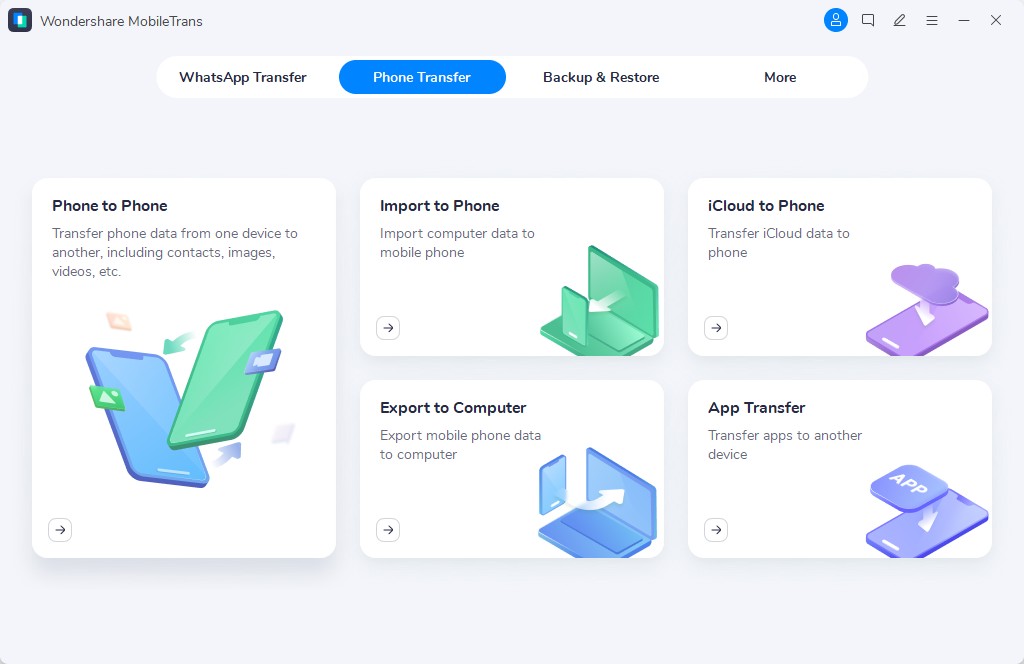
Install MobileTrans on your computer, then click the Phone to Phone tab and connect both Phones via USB.
Step 02
Choose What to Transfer
Select the data you want to move, such as contacts, photos, messages, videos, and other important files.
Step 03
Start the Transfer
Click the transfer button and wait for the process to finish. Once done, check your new phone to make sure everything has been copied successfully.


iPhone 16 vs iPhone 14: Which One Should You Buy?
Choose the iPhone 16 if its day-to-day strengths line up better with your needs. It still gives you the core iPhone experience, including a capable 48MP main camera, while keeping the recommendation grounded in the features most people will actually notice. In practical terms, that usually means getting up to 22 hours of video playback, stronger rear camera flexibility, and stronger A18 performance. The iPhone 14 is the better pick only if you specifically want its hardware-specific upgrades that justify paying more.
In short, choose the iPhone 14 only if you specifically want its camera, battery, performance, or storage advantages. Otherwise, the iPhone 16 remains the more practical pick for buyers who care more about price, size, and everyday comfort.
Winner: iPhone 16Final Verdict
Overall, the iPhone 16 is the stronger hardware choice in the iPhone 16 vs iPhone 14 comparison. With no launch price gap between them, the value call comes down more to which strengths will matter in your real day-to-day use than to raw spec escalation on paper. It still gives you the core iPhone experience, including a capable 48MP main camera, while keeping the recommendation focused on the features most buyers will actually notice.
The iPhone 14 is still the easier-handling choice if you specifically want a lower real-world price and a more budget-friendly deal.