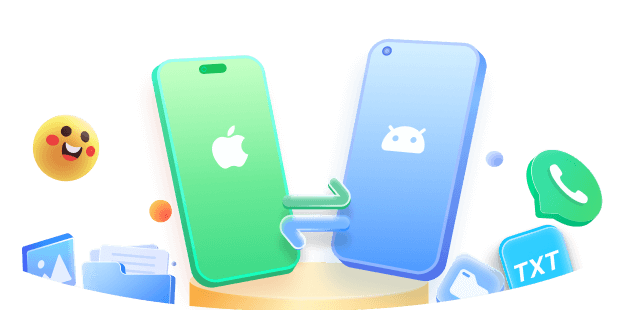
How to Share Files and PDFs Between iPhone and Android
Files and PDFs can be shared between iPhone and Android through a cross-platform local-transfer app, cloud storage, messaging, or a USB-C connection. Direct local transfer is usually the fastest way to transfer large files between iPhone and Android. Cloud storage works well for smaller documents and remote sharing.
Steps
- Choose a transfer method. Use a cross-platform local-transfer app for speed, cloud storage for simple sharing, or a computer for controlled file management.
- Connect both phones. For local transfer, place both devices on the same Wi-Fi network and open the selected transfer app on each phone.
- Select the files or PDFs. On iPhone, locate documents in the Files app, Photos app, or a supported messaging app. On Android, select files from Files or Downloads.
- Approve the transfer. Confirm the receiving device, accept required permissions, and wait until the transfer finishes before closing the app.
- Check the destination folder. Open the received PDF or file from Downloads, Files, or the transfer app. Confirm that the file opens correctly.
Common Issues and Fixes
- Android cannot receive an AirDrop file: AirDrop is designed for Apple devices. Use a cross-platform transfer app, cloud storage, email, or messaging instead.
- The transfer app cannot find the second phone: Different Wi-Fi networks, disabled local-network permission, or VPN settings can block discovery. Connect both phones to the same network and enable local-network access.
- A large file transfer stops: Weak Wi-Fi, low storage, or background app restrictions may interrupt the process. Keep both phones near the router, free storage space, and keep the transfer app open.
- The PDF opens incorrectly: An incomplete transfer or unsupported reader may cause display problems. Transfer the PDF again and open the file with a current PDF reader.
- A shared file loses its original name or folder: Messaging and cloud services may rename or relocate files. Use a local-transfer app or computer connection when folder structure matters.
Quick Tips
- Check available storage on the receiving Android device before sending multiple files.
- Avoid Bluetooth for large files because transfer speeds are usually slower and device compatibility varies.
- Cloud links require internet access and may expire or require account permissions.
- Files transferred through messaging apps may be compressed or limited by file-size restrictions.
Related Questions
What is the fastest way to transfer files between iPhone and Android?
A direct local-transfer app using the same Wi-Fi network is usually fastest for large files. A USB-C connection can also work when the phones, cable, and file-management method support direct access.
How do I transfer files from my iPhone to my Android device?
Select files in the iPhone Files app, send the files through a cross-platform transfer app or cloud service, then accept the transfer on Android. PDFs normally appear in Downloads or the selected destination folder.
💡Protip:
For a broader phone-to-phone transfer involving supported contacts, photos, videos, and documents, MobileTrans can simplify device migration when compatible connection methods are available.