


 TL;DR:
Choose the iPhone 17 Pro Max if you prefer ecosystem stability and simple everyday usability, but opt for the Samsung S26 Ultra if your workflow requires extensive visual customization, built-in S Pen tools, and heavy multitasking.
● The Samsung S26 Ultra features a lighter 214g titanium frame, a Snapdragon 8 Elite Gen 5 processor for stronger multi-core handling, a 200MP main quad-camera system, and 60W wired charging that reaches 75% capacity in 30 minutes.
● The iPhone 17 Pro Max utilizes an Apple A19 Pro chip for highly efficient single-core performance, features a 48MP triple camera setup with a LiDAR scanner for 3D spatial video, and prioritizes steady charging speeds to protect long-term battery health.
● Users migrating between these Android 16 and iOS 26.x devices can securely transfer over 18 data types directly from phone to phone using MobileTrans without an internet connection or overwriting existing data.
Ask AI for a summary
 ChatGPT
 Perplexity
 Gemini
 Claude
 Grok
Grok
As the Samsung S26 Ultra launch approaches, excitement among smartphone users worldwide is growing. Many people expect Samsung's next flagship this year to feature ber cameras and an improved design. At the same time, many iPhone users are considering a significant upgrade this year, with new options. They want to know which flagship makes the most sense for most people in day-to-day use.
Before selecting a new smartphone, users should consider the software and support. This article compares the Samsung S26 Ultra and iPhone 17 Pro Max side by side to determine which flagship is a worthy upgrade.
In this article

Part 1. Design Face-Off in Samsung S26 Ultra vs iPhone 17 Pro Max
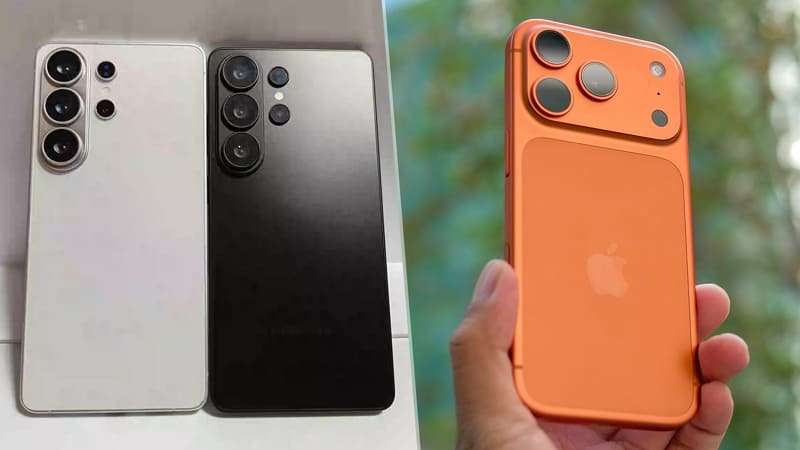
As the launch of the Samsung S26 Ultra approaches, new rumors are emerging. Users can compare these phones and choose the best model. PhoneArena says the Samsung S26 Ultra will have the same water- and dust-resistance as the latest iPhone flagship. Now let's compare Samsung S26 Ultra vs iPhone 17 Pro Max in terms of design and build quality:
| Design Aspect | iPhone 17 Pro Max | Samsung S26 Ultra |
| Frame Material | Aluminum frame | Titanium frame |
| Front Glass | Ceramic Shield glass for better drop protection | Gorilla Glass Armor 2 with b scratch and reflection resistance |
| Back Glass Finish | Glass back with a polished look | Glass back with a more pro‑tool look |
| Thickness | 8.75 mm body | 7.9 mm body |
| Weight | 231–233 g, heavier in daily use | 214 g, easier to hold for a long time |
| Bezel Look | Thin, Dynamic Island breaks the clean top line | Thin, uniform bezels for a sharper all‑screen look |
| Premium Feel | Feels like a luxury accessory or jewelry‑style gadget | Feels like a professional tool built for power users |
| Signature Feature | Dynamic Island makes the design instantly recognizable | Built‑in S Pen slot and separate camera rings give it a unique “Note” identity |
Part 2. Samsung S26 Ultra vs iPhone 17 Pro Max: Flagship Battle Explained
Samsung S26 Ultra and the latest iPhone flagship are gaining global attention from tech enthusiasts. Many enthusiasts want to know the performance and pricing differences between these top flagships. Next, we will compare Samsung S26 Ultra vs iPhone 17 Pro Max in camera, display, and more.
Performance Showdown
A recent Geekbench leak suggests that the Galaxy outperforms the iPhone 17 Pro Max in multi‑core benchmarks under realistic workloads. With both flagship processors, demanding applications can run without any detectable slowdowns. Moreover, iPhone 17 Pro Max still delivers brilliant single‑core results, meaning swift everyday performance and efficient power use for most tasks.
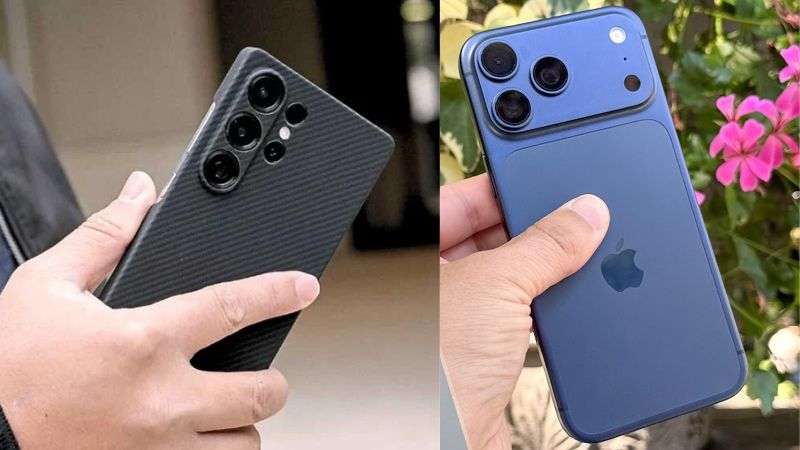
The benchmark results reveal that Samsung handles heavy tasks more efficiently under real-world conditions. For a clear view of performance features, please refer to the comparison table below:
| Performance Aspect | iPhone 17 Pro Max | Samsung Galaxy S26 Ultra |
| Chipset | Apple A19 Pro, 3 nm hexa‑core CPU | Snapdragon 8 Elite Gen 5, 3 nm octa‑core CPU |
| GPU | Apple 6‑core GPU tuned for smooth graphics | Adreno 840 GPU aimed at high frame rates in heavy 3D games |
| RAM | 12 GB RAM | 12 GB LPDDR5X RAM |
| Storage Options | 256 GB, 512 GB, 1 TB, 2 TB NVMe storage | 256 GB, 512 GB, 1 TB UFS 4.0 storage |
| OS and Updates | iOS 26.x with long‑term Apple support | Android 16 with promise of up to 7 major OS updates |
| Benchmarks (CPU) | About 3,775 single‑core and 9,749 multi‑core in tests | 3,601 single‑core and 10,686 multi‑core in recent PhoneArena leaks |
| Thermal Management | 3 nm chip helps keep temperature under control | New 3 nm Snapdragon for balanced heat |
Galaxy delivers ber multi-core performance for heavy apps and daily multitasking. On the other hand, iPhone delivers faster single-core results for everyday tasks without noticeable slowdowns. Users should carefully consider their usage habits before deciding which device best fits their workflow. RAM, storage, and system updates can affect long-term performance and overall experience over several years.
Camera Comparison
Recent leaks show that the new Samsung flagship will feature advanced rear camera systems. The Galaxy will focus on versatile zoom and premium-resolution photography, with multiple lenses as before. iPhone emphasized natural colors and video stabilization in all lighting conditions. Now we will compare Samsung S26 Ultra vs iPhone 17 Pro Max for rear camera specs:
| Category | iPhone 17 Pro Max | Samsung S26 Ultra |
| Rear Camera Setup | Triple rear camera system plus LiDAR sensor | Quad rear camera system |
| Camera Modules | 48 MP, f/1.8, 24mm wide, 1/1.28", 1.22µm, dual pixel PDAF, sensor‑shift OIS | 200 MP, f/1.7, 24mm wide, 1/1.3", 0.6µm, multi‑directional PDAF, OIS |
| 48 MP, f/2.8, 100mm periscope telephoto, 1/2.55", 0.7µm, PDAF, 3D sensor‑shift OIS, 4x optical zoom | 10 MP telephoto, 1/3.94", PDAF, OIS, 3x optical zoom | |
| 48 MP, f/2.2, 13mm, 120˚ ultrawide, 1/2.55", 0.7µm, PDAF | 50 MP, f/3.4, 111mm periscope telephoto, 1/2.52", 0.7µm, PDAF, OIS, 5x optical zoom | |
| TOF 3D LiDAR scanner used for depth and AR | 50 MP, f/1.9, 120˚ ultrawide, 1/2.5", 0.7µm, dual pixel PDAF, Super Steady video | |
| Features | Dual‑LED dual‑tone flash, HDR for photo and panorama shots | Laser AF, Best Face, LED flash, auto‑HDR, panorama |
| Video | 4K@24/25/30/60/100/120fps, 1080p@25/30/60/120/240fps, 10‑bit HDR, Dolby Vision HDR, ProRes RAW, Apple Log 2, 3D spatial video/audio | 8K@24/30fps, 4K@30/60/120fps, 1080p@30/60/120/240fps, 10‑bit HDR, HDR10+, gyro‑EIS |
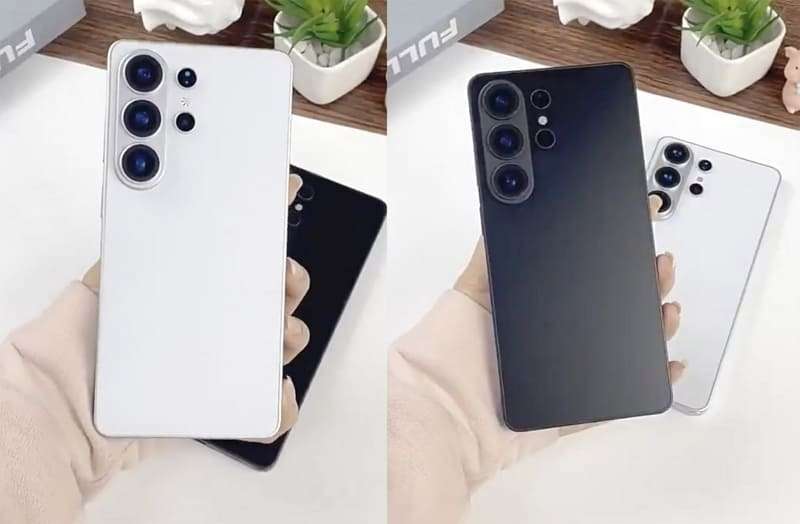
Similarly, the front cameras on both flagship phones appear very similar in hardware and day-to-day performance. Each device uses a high-resolution selfie sensor designed for clear portraits and smooth video calls. Next, we will examine the rumored S26 Ultra front camera specifications to see how these similarities affect real use:
| Category | iPhone 17 Pro Max | Samsung S26 Ultra |
| Front Camera | Single selfie camera plus depth sensor | Single selfie camera |
| Modules | 18 MP multi‑aspect, f/1.9, 20mm ultrawide, PDAF | 12 MP, f/2.2, 26mm wide, 1/3.2", 1.12µm, dual pixel PDAF |
| SL 3D sensor for depth | No additional sensor | |
| Features | HDR, Dolby Vision HDR, 3D spatial audio, stereo sound recording, ProRes RAW, Apple Log 2 | HDR, HDR10+ |
| Video | 4K@24/25/30/60fps, 1080p@25/30/60/120fps, gyro‑EIS | 4K@30/60fps, 1080p@30fps |
Display Experience
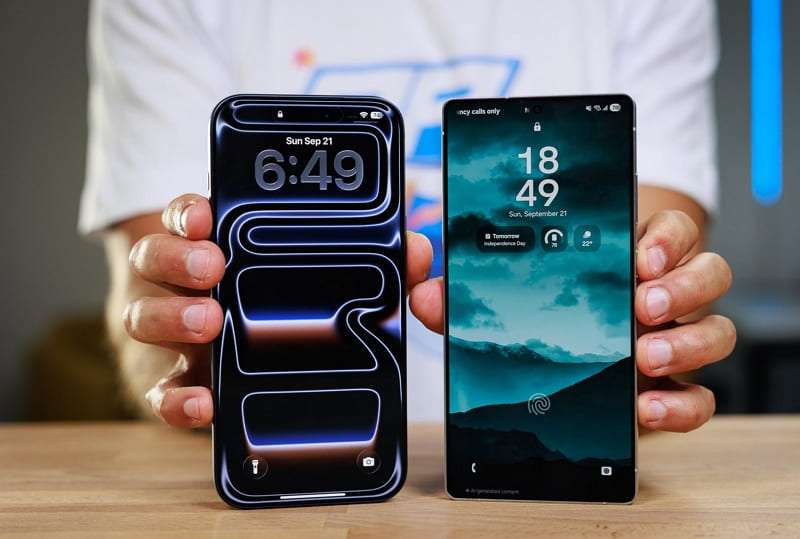
Both phones deliver a bright display suitable for gaming and video streaming. iPhone focuses on natural colors to provide realistic viewing experiences across all content. On the other hand, Samsung emphasizes punchy visuals for more striking images and a more immersive media experience. To see how Samsung S26 Ultra vs iPhone 17 Pro Max displays honestly differ, check the comparison table below:
| Display Spec | iPhone 17 Pro Max | Galaxy S26 Ultra |
| Panel Type | LTPO Super Retina XDR OLED, 120Hz, HDR10, Dolby Vision | Dynamic LTPO AMOLED 2X, 120Hz, HDR10+ |
| Size | 6.9 inches, 115.6 cm² | 6.9 inches, 116.9 cm² |
| Screen‑to‑Body Ratio | ~90.7% | ~91.5% |
| Resolution | 1320 × 2868 pixels, 19.5:9 ratio, ~460 ppi density | 1440 × 3120 pixels, 19.5:9 ratio, ~498 ppi density |
| Peak Brightness | 3000 nits peak, 1600 nits HBM, 1000 nits typical | 2600 nits peak |
| Glass/Protection | Ceramic Shield 2, Mohs level 5 | Corning Gorilla Armor 2 |
| Coating | Anti‑reflective coating | DX anti‑reflective coating |
Battery and Charging
Samsung S26 Ultra aims for faster charging to prioritize quick top‑ups during short breaks. Reports by Android Central suggest charging is a significant upgrade over older Samsung flagships. This focus should help heavy users keep going without long waits at the outlet.
On the other hand, iPhone's flagship focuses more on steady power use than maximum charging speed. This approach is meant to protect long‑term battery health for regular users. Anker's testing describes the charging experience as balanced between speed and battery care. Let’s look at the battery and charging comparison table below to see how they differ:
| Spec | iPhone 17 Pro Max | Samsung S26 Ultra |
| Battery Type | Li‑Ion battery, non‑removable | Li‑Ion battery, non‑removable |
| Capacity | 4823 mAh (Nano‑SIM model) and 5088 mAh (eSIM model) | 5000 mAh |
| Wired Charging | PD 3.2, AVS, reaches 50% in 20 minutes | 60 W wired, PD 3.0, reaches 75% in 30 minutes |
| Wireless Charging | 25 W MagSafe/Qi2, about 50% in 30 minutes (15 W in China) | 25 W wireless (Qi2.2) |
| Reverse Charging | 4.5 W reverse wired charging | 4.5 W reverse wireless charging |






Software Experience
Every day use feels different on the Samsung S26 Ultra vs. the iPhone 17 Pro Max once you unlock them. Menus, gestures, and settings layouts guide you to use each phone in its own way. Over time, these small changes shape how natural or awkward each system feels for you.
Interface and Customization
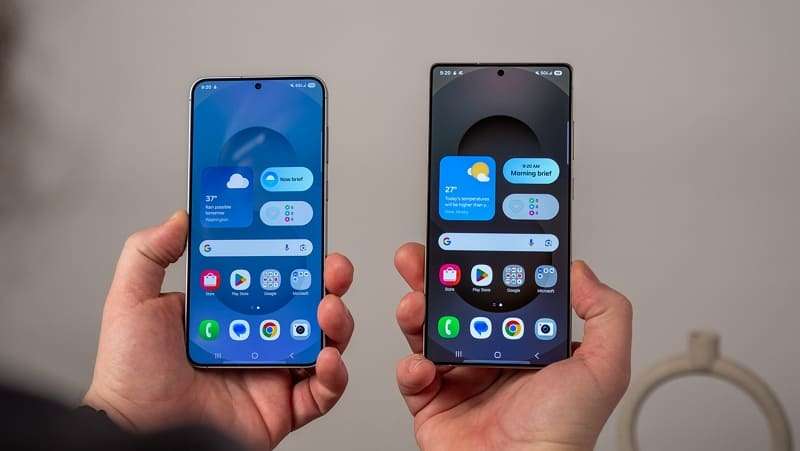
On the Samsung S26 Ultra, you can rearrange the screen in many ways, so the phone matches your habits. Extra visual controls and layout tools help you shape how apps appear and move. By contrast, iPhone 17 Pro Max keeps the layout steadier and more predictable across pages. Over time, one approach can feel more playful, while the other can feel stricter.
Ecosystem and Updates
With the Samsung S26 Ultra, the overall experience improves over time. On iPhone 17 Pro Max, the feel also changes slowly as new software versions arrive. For a quick view of long‑term support and ecosystem benefits, look at the short table below.
| Aspect | Samsung S26 Ultra | iPhone 17 Pro Max |
| Device Ecosystem | Galaxy Watch, Buds, Tab, Windows PC link. | Apple Watch, AirPods, Mac, iPad link. |
| Cloud Services | Use a Google account for backup and sync | iCloud for backup and sync. |
| Cross‑Device Features | Quick Share and Link to Windows | AirDrop and Handoff tools. |
| Update Policy | Multi‑year Android and security updates. | Long iOS and security support. |
| AI and Extras | One UI tools and Samsung apps. | Apple Intelligence and system tools. |
Price Expectations
Flagship buyers remain firmly in the top price band with these two models. Price shifts compared with the previous generation look modest rather than dramatic.
Pricing
In the United States, the base model of the latest Apple flagship costs about $ 1,199 for most buyers. Estimates for the upcoming Ultra device point to a launch figure similar to the S25 Ultra, as reported by PhoneArena. This positions both devices at nearly the same level for anyone considering a premium handset.
Availability
Across major regions, the iPhone is already on shelves and available through carrier deals. The initial news on the Samsung S26 Ultra hints at a wide release, with the leading markets first, then the others. In Asian countries, both models arrive a bit later via official distributors.
Part 3. Who Should Pick Samsung S26 Ultra vs iPhone 17 Pro Max in 2026?
After comparing Samsung S26 Ultra vs iPhone 17 Pro Max in terms of features, many users might be thinking which device makes more sense. Your final pick depends on both the ecosystem you enjoy and which daily experience feels more natural. So, we have compiled the strengths and limitations of both flagships for you.
Strengths and Limitations of iPhone 17 Pro Max
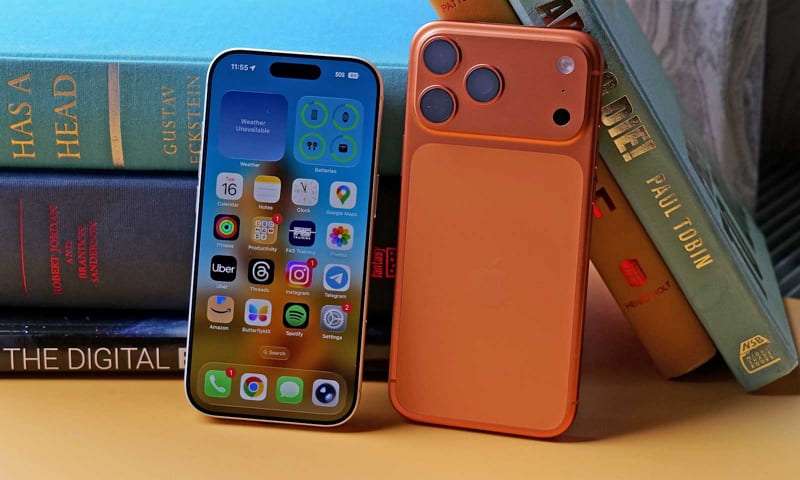
This phone glides through heavy tasks, thanks to its efficient chip, which keeps everything feeling smooth. It delivers natural-looking photos and videos, though yearly camera upgrades can seem subtle. However, it offers extended software support, while the closed ecosystem limits deeper customization. At the same time, this device feels polished and calm to use, yet some pro tools stay hidden.
Strengths and Limitations of Samsung S26 Ultra
On this phone, powerful hardware makes multitasking feel close to laptop-level. It lets you reshape almost every visual detail, though menus and options may start to feel crowded. Meanwhile, the S Pen turns it into a sketchbook and a notebook, but many users rarely use it. At its best, this device captures sharp zoom shots, though processing can add a bit too much drama.
Final Decision
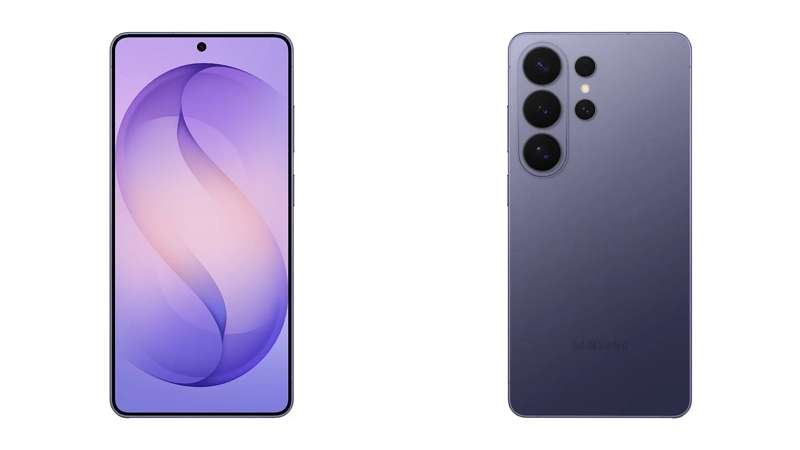
Pick the iPhone 17 Pro Max if you prefer simplicity, stability, and tight Apple integration. Choose the Samsung S26 Ultra if you value customization, S Pen tools, and the freedom to multitask heavily. Both are top‑tier devices, so focus on which strengths match your daily routine.
Pro Tip: Upgrade to a New Flagship Without Losing Your Data with MobileTrans
After comparing Samsung S26 Ultra vs iPhone 17 Pro Max, many users plan to upgrade to a new flagship device. This is where MobileTrans helps you simplify this process by supporting transfers across 6,000+ Android and iOS devices. It allows users to transfer 18+ data types between devices. The tool supports direct phone-to-phone transfer between Android and iOS without resetting or overwriting existing data.
Key Features
- iCloud to Android Migration: MobileTrans lets users move data directly from iCloud to an Android device without using an iPhone.
- Cross-Platform Phone Transfer: The tool supports direct data transfer between Android and iOS devices without compatibility issues.
- Faster Transfer Speed: MobileTrans completes phone-to-phone transfers up to 96.32% faster than many other tools.
- Data Protection: MobileTrans works offline to keep personal data secure during the entire transfer process.
- Apps Transfer: Users can transfer supported apps from one phone to another without manual reinstallation.
How to Transfer Data While Upgrading Using MobileTrans
Now, look at the steps below to transfer data while upgrading using this innovative tool:
Step 1. First, press the Phone to Phone tab, then connect both mobile devices via a USB cable.
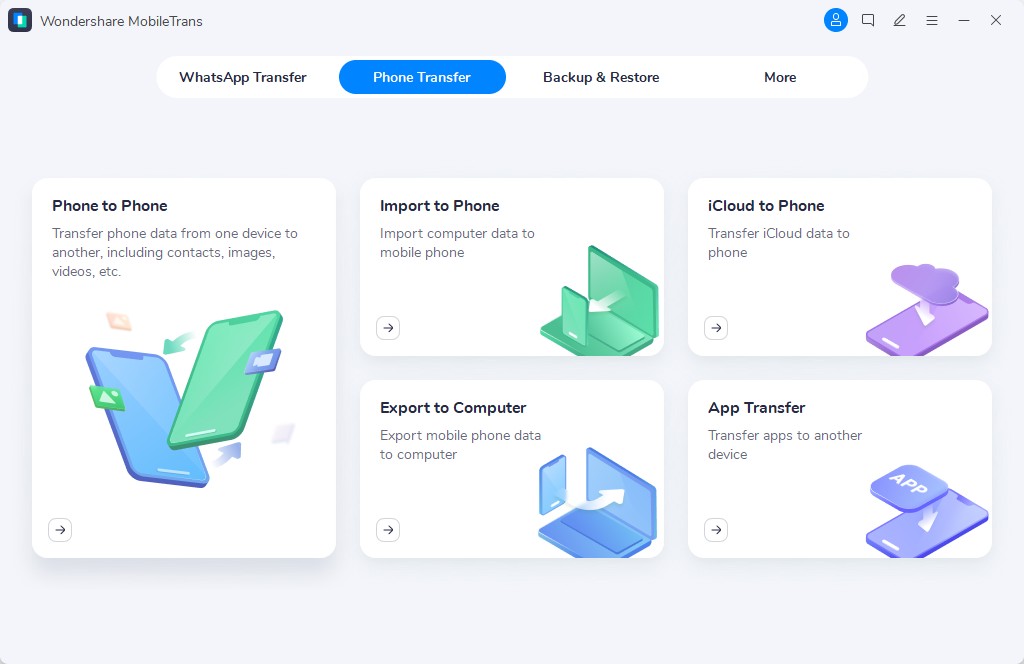
Step 2. Now, verify the Source and Destination devices using the Flip icon. Next, choose file types and click Start.

Step 3. Monitor the process and wait for it to complete, or press Cancel to cancel the transfer.
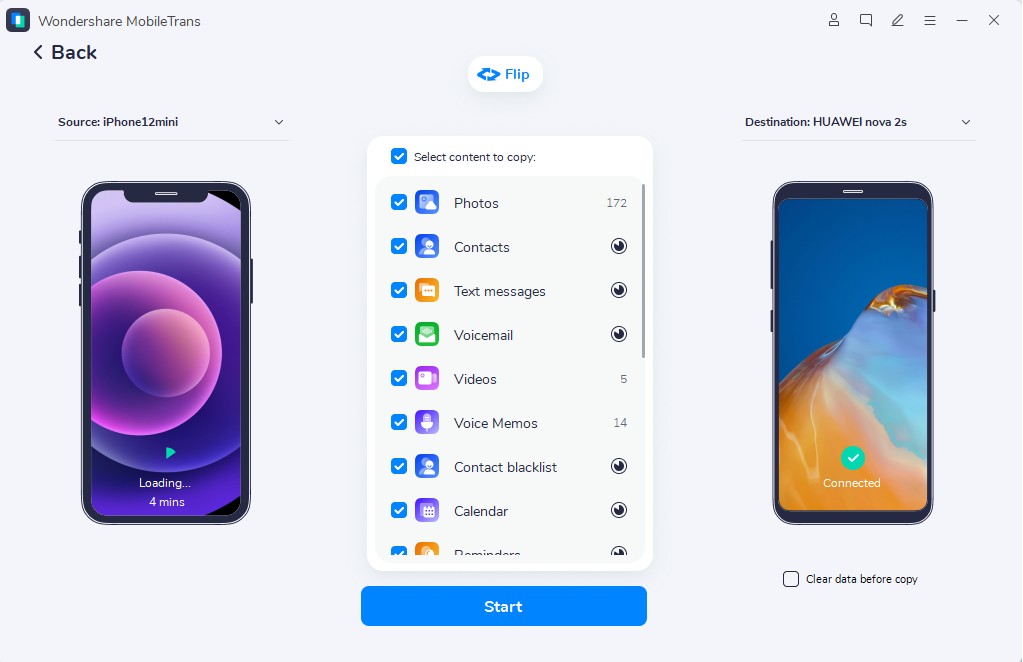
When switching between Android and iPhone, the MobileTrans app enables direct phone-to-phone data transfer without a computer. It uses secure local connections and moves data up to 200 times faster than Bluetooth.
Conclusion
In conclusion, this article examined Samsung S26 Ultra vs iPhone 17 Pro Max across cameras, performance, and software. Readers can determine which flagship better suits their daily habits, depending on whether they prioritize creative tools or ecosystem stability. For users planning an upgrade, MobileTrans provides a reliable way to move data safely between devices, making the transition worry-free.
FAQs
-
Is mobile gaming noticeably different on these two flagship phones?
Fast chips and 120Hz screens keep games smooth on both, with b thermal control. Still, Samsung S26 Ultra vs iPhone 17 Pro Max gaming performance can differ depending on whether the device is optimized for iOS or Android. -
Do these phones offer good security options for unlocking and payments?
Each device supports biometric security, such as face or fingerprint recognition, as well as PIN or passcode fallback. They also integrate secure elements for contactless payments, protecting card details during everyday tap‑to‑pay use. -
Can I still use my old charger with these new phones?
Most existing USB‑C chargers work with the Ultra or a USB‑C iPhone model. However, older, slower chargers reduce charging speeds, so consider a newer adapter to match each phone's capabilities.