
 TL;DR:
Transferring your WhatsApp chat history and media to a new phone is best handled via native cloud backups like Google Drive or iCloud for same-OS upgrades, while cross-platform migrations between Android and iPhone are most flexibly executed using MobileTrans to avoid factory resets.
● Official cross-platform migration tools, specifically Apple's Move to iOS and Samsung Smart Switch, strictly require you to transfer your WhatsApp data during the initial setup phase of the new device.
● MobileTrans provides a direct PC or Mac cable-based alternative that works between over 6000 iOS and Android devices at any time, featuring a "Transfer and Merge" option that integrates old data without overwriting existing chats on the target phone.
● Universal methods like Email Chat Export allow you to save individual conversations with or without media as readable text files, but this exported data cannot be restored back into the WhatsApp application interface.
Ask AI for a summary
 ChatGPT
 Perplexity
 Gemini
 Claude
 Grok
Grok
There's nothing more special about unboxing a fresh device with faster speed, a better camera, and new advanced features. In the middle of the excitement comes a necessary task: ensuring that all your valuable data makes the journey with you. Among these, WhatsApp is considered more than just a messaging app; it is a repository of meaningful conversations and work discussions.
This is why determining how to transfer WhatsApp to a new phone is a must to pick up conversations where you left off. To one's relief, WhatsApp has simplified the migration process, and it's easier to move data even between different operating systems. The methods in this article will explain how to preserve the flow of conversation that matters to you. From WhatsApp's built-in transfer to a professional app, you're sorted.
In this article
-
- Way 1. The Most Flexible Approach to Transfer WhatsApp to All Platforms: MobileTrans
- Way 2. WhatsApp's Built-in Transfer Features
- Way 3. Google Drive Backup and Restore (Android to Android)
- Way 4. iCloud Backup and Restore (iPhone to iPhone)
- Way 5. Manual Transfer via Local Backup (Android to Android)
- Way 6. Utilize Move to iOS/Samsung Smart Switch for Transfer (Android to iPhone)
- Way 7. Email Chat Export (Any Platform)
- Way 8. Take Screenshots and Send Them Over
Part 1. Why Can It Be Difficult to Transfer WhatsApp to a New Phone Successfully?
When you transfer WhatsApp messages to a new phone, the process isn't always as simple and can drive the listed challenges along the way:
Different Operating Systems: The migration of WhatsApp between 2 phones with different operating systems, like from Android to iPhone or vice versa, can be tricky. Both systems offer different backup systems, so the data doesn't automatically sync across.
Backup Not Up-to-Date: Another issue that people often face is that their last WhatsApp backup is either outdated or missing entirely. When automatic backups aren't turned on, or the internet connection is weak, your media might not be saved to the cloud.
Limited Storage Space: Cloud backups, particularly the ones containing media like videos and voice notes, can be quite large. If the new phone has limited storage or the cloud account is full, you might not be able to restore your complete WhatsApp history.
Incompatibility with Older App Versions: On occasion, when you don’t have the latest version of WhatsApp installed on both devices, the transfer process might be hindered. New transfer features are available in newer versions of the app, and outdated software can cause a failed restore.
Connection Issues During Transfer: A smooth transfer relies on a stable internet connection or, in various cases, a direct cable link. Any drop in the connection during the process, either due to poor network strength or app timeout, can disrupt the transfer.
Part 2. 8 Ways to Transfer WhatsApp to a New Phone
If you plan to migrate WhatsApp to a new phone, remember the selection of the correct method (depending on your device) and preferences count majorly. To get you sorted, we've rounded up a detailed comparison of all 8 effective methods, from official apps to flexible third-party solutions:
| Approach | Compatibility | Transferable Data |
Technical Requirement |
No Backup Needed |
Best For |
| MobileTrans | Compatible with 6000+ iOS and Android devices. |
Chats |
PC/Mac and original USB cables | ✅ | Cross-platform, complete, no-reset transfers. |
| WhatsApp Built-in Feature | Android to iPhone (via Move to iOS) iPhone to Android (via USB-C to cable). |
Full chat history or media. | Set up during the initial phone setup. | ✅ | Official, one-time platform switch. |
| Google Drive | Android to Android | Chat Media or more |
Google Account, Wi-Fi | ❌ | Android users with Google Drive backups. |
| iCloud | iPhone to iPhone | Images Videos and more. |
iCloud account, strong internet | ❌ | iPhone users prefer cloud-based backups. |
| Local Backup | Android to Android | Chats and media (manual file transfer) | File manager, USB/SD card | ❌(Local) | Users who want manual handling. |
| Move to iOS/Samsung Smart Switch | Android to iPhone or Samsung | Messages media settings. |
Move to iOS app or Smart Switch, USB Cable | ✅ | New iPhone/Samsung users doing the full setup. |
| All platforms | Individual chats | ❌ | ✅ | Saving important chats in a readable format. | |
| Screenshots | All platforms | Specific messages (visual only) | ❌ | ✅ | Archiving a few chats without a full transfer. |
Among all the discussed methods, MobileTrans emerges as the most reliable option due to its broad compatibility. Unlike other methods, it offers a one-click solution that transfers nearly all data types without overwriting the existing one.
Part 3. 8 Ways on How to Transfer WhatsApp to a New Phone Without Losing Data
If you're concerned about your chats or photos when upgrading your device, remember there are several ways to keep everything intact. Go through this section and examine how to transfer WhatsApp messages to a new phone with 8 reliable approaches to follow:
Way 1. The Most Flexible Approach to Transfer WhatsApp to All Platforms: MobileTrans
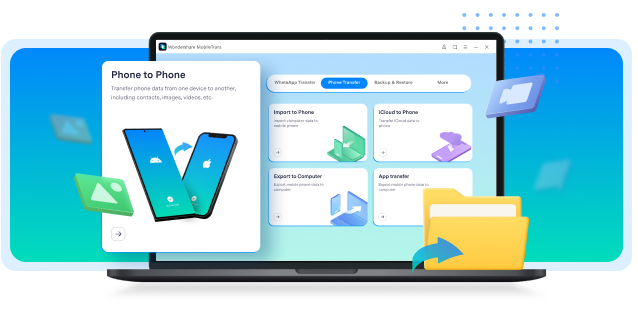
A switch to a new phone should not be stressful, and yet many people's biggest concern is how to move WhatsApp data securely. From personal chats and photos to important voice notes and documents, there's much at stake. For this, we have a dependable solution, MobileTrans, that migrates WhatsApp to a new phone with all data in one place. Its WhatsApp Transfer function supports migration between more than 6000 iOS and Android devices.
Besides, it provides the Transfer and Merge option that keeps both old and new chats on the new device. You can specify what type of data you want to transfer from an existing device. The app further facilitates verifying the data once migrated to the new phone. It enables one to even transfer their shared location on WhatsApp and videos in their original quality.




Complete Manual on How to Transfer WhatsApp to All Platforms
For a smoother WhatsApp transfer to a new phone, walk through the given tutorial to ensure a stress-free move between operating systems:
Step 1. Integrate MobileTrans and Settle on App Transfer
Access MobileTrans on your PC and choose the "App Transfer> WhatsApp" option.
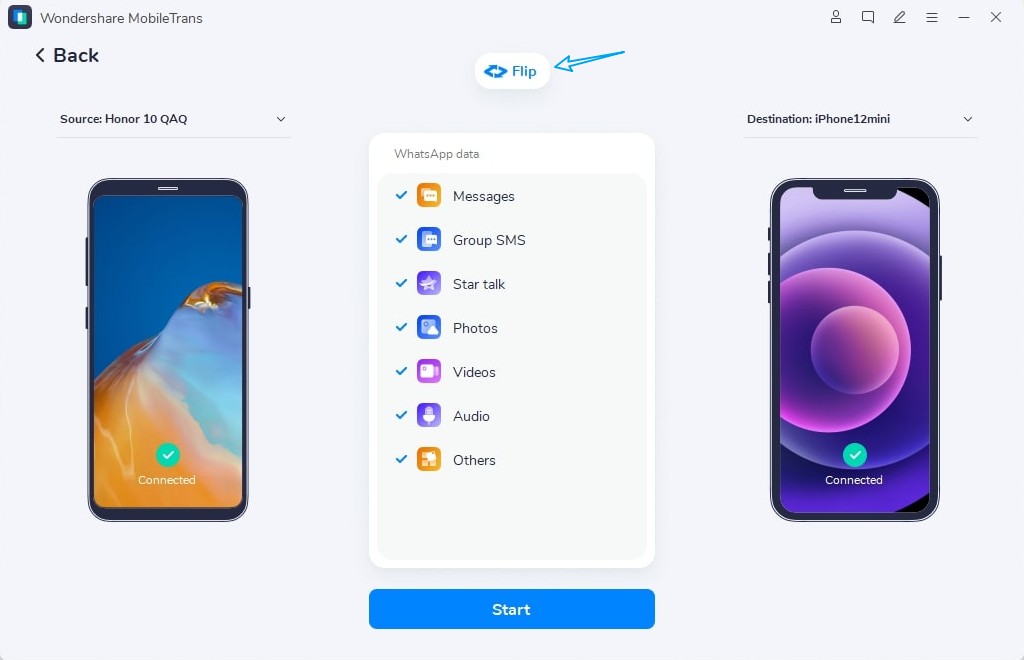
Step 2. Select the Transfer and Merge Option
Pair both phones to the computer, choose “Transfer and Merge," select all data, and click "Start.”
Step 3. Verify Your Data Once Transfer Completes
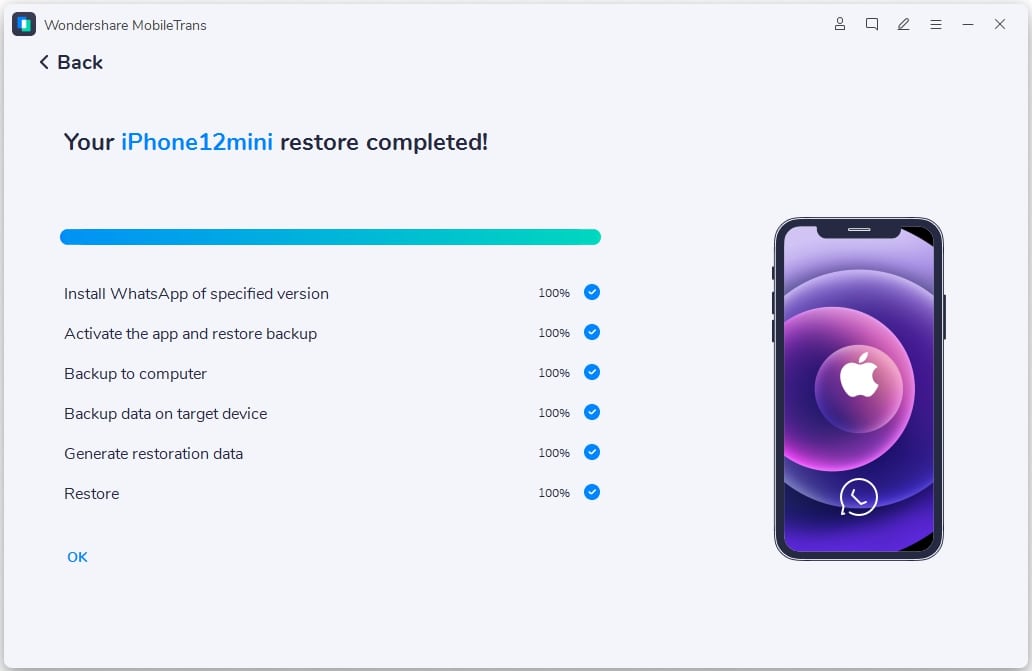
When completed, examine WhatsApp on the new device for data verification.



Way 2. WhatsApp's Built-in Transfer Features
For users who prefer official methods to migrate WhatsApp to a new phone, WhatsApp offers built-in transfer options. The migration from an Android device to an iPhone can be facilitated using Apple's Move to iOS app for complete data transfer. Conversely, iPhone to Android requires the same phone number on both devices with a working USB cable. For better understanding, go through the given stepwise manual and learn for yourself:
1. Android to iPhone
Instructions: Access Move to iOS on your Android > Enter code on Android phone > Tap Continue > Choose WhatsApp > Continue again. A detailed stepwise guide with proper screenshots is given ahead.
2. iPhone to Android
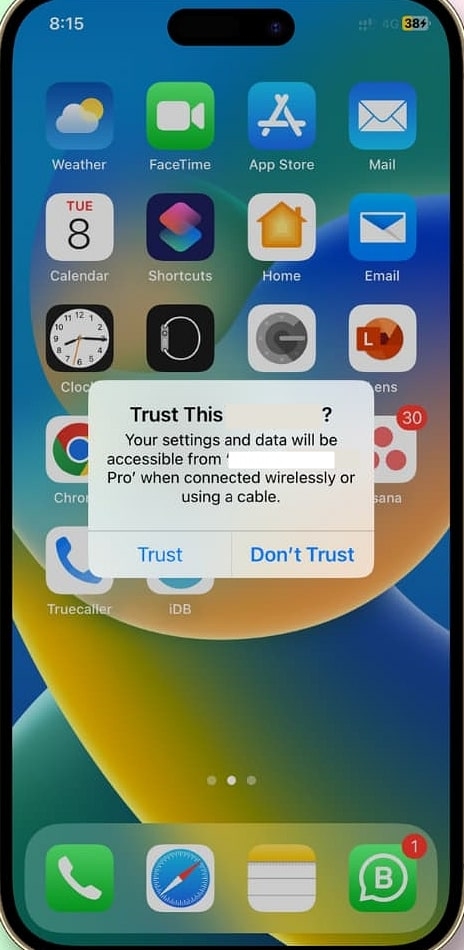
Instructions: Download WhatsApp on iPhone > Set up new Android device > Connect devices via cable in Copy Apps and Data screen. Tap "Trust" on the warning > Scan the QR code with the iPhone camera > Press Start > Open and verify WhatsApp on Android > Import chats.
Way 3. Google Drive Backup and Restore (Android to Android)
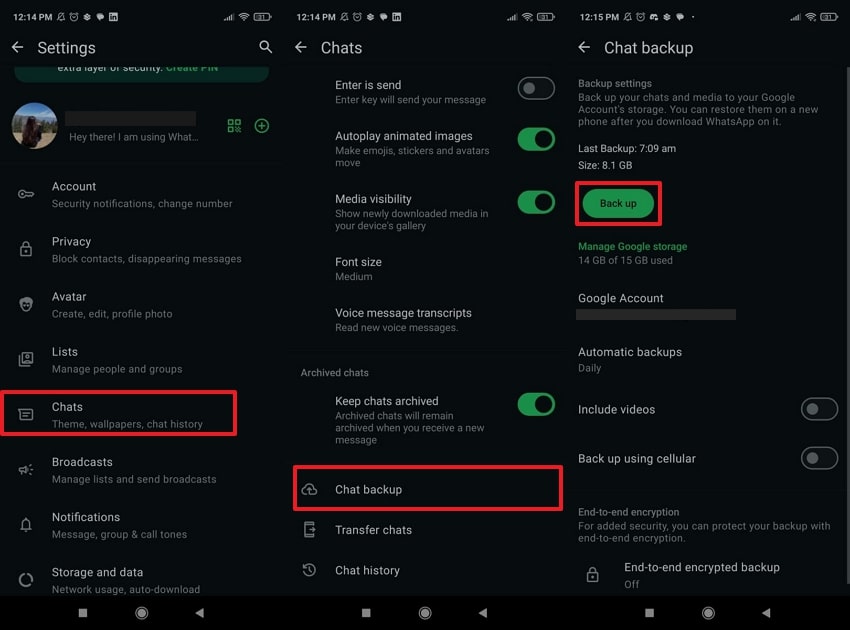
Google Drive is a convenient way to transfer WhatsApp messages to new phones, especially from Android to Android. Once all your existing data is backed up, you can restore it on your new device from Google Drive. Always remember to select a backup frequency (daily, weekly, or monthly) or simply back up for an instant backup. To maintain chat continuity without manual exporting, follow the given stepwise guide:
Step 1. Open WhatsApp on an old Android > Tap the Three Dots icon > Settings > Chat option > Chat Backup > Press Backup to backup now.
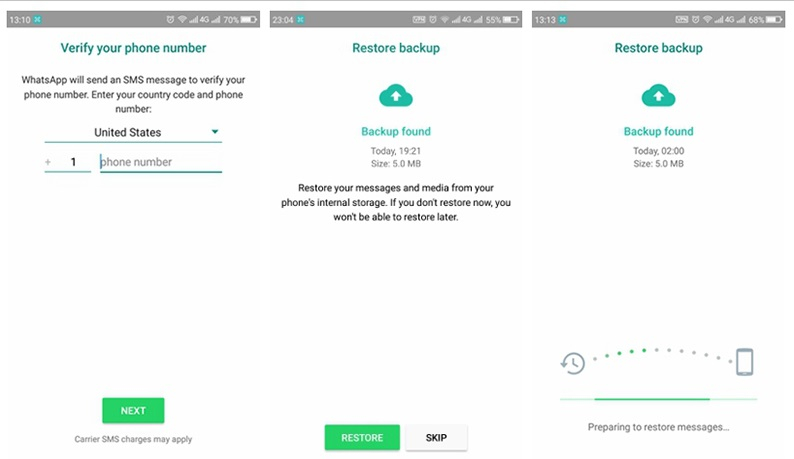
Step 2. To transfer backup on the new Android, download WhatsApp > Verify your phone number > Restore button to start the restoration. Tap "Next" to display your chats once the initialization is complete.
Way 4. iCloud Backup and Restore (iPhone to iPhone)
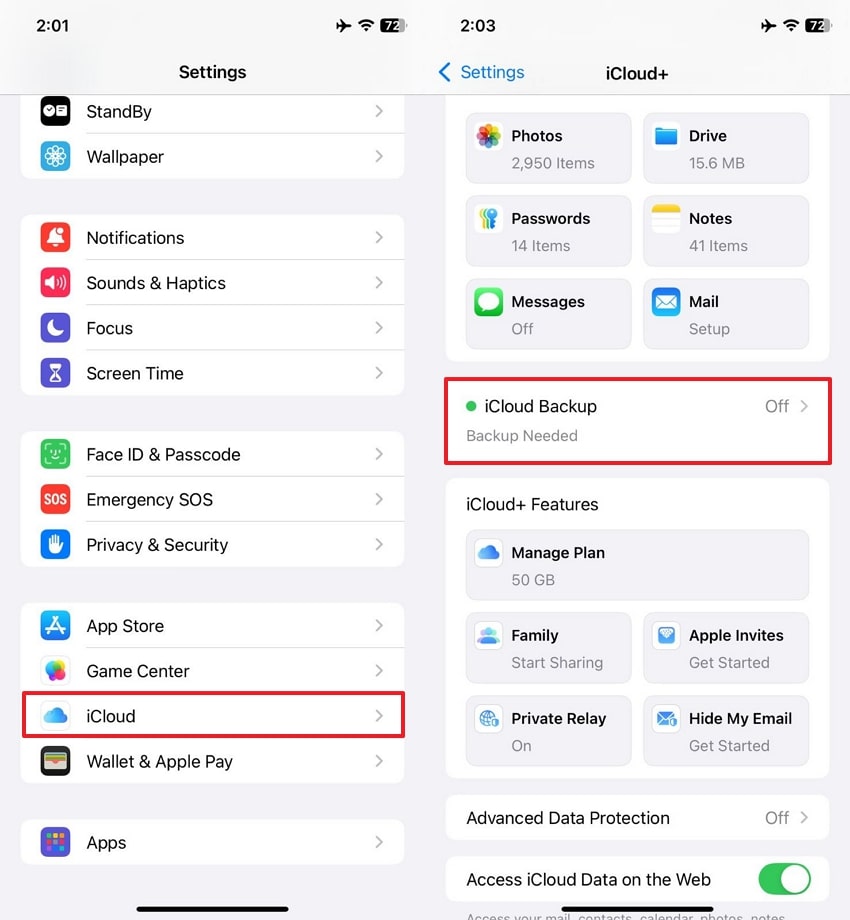
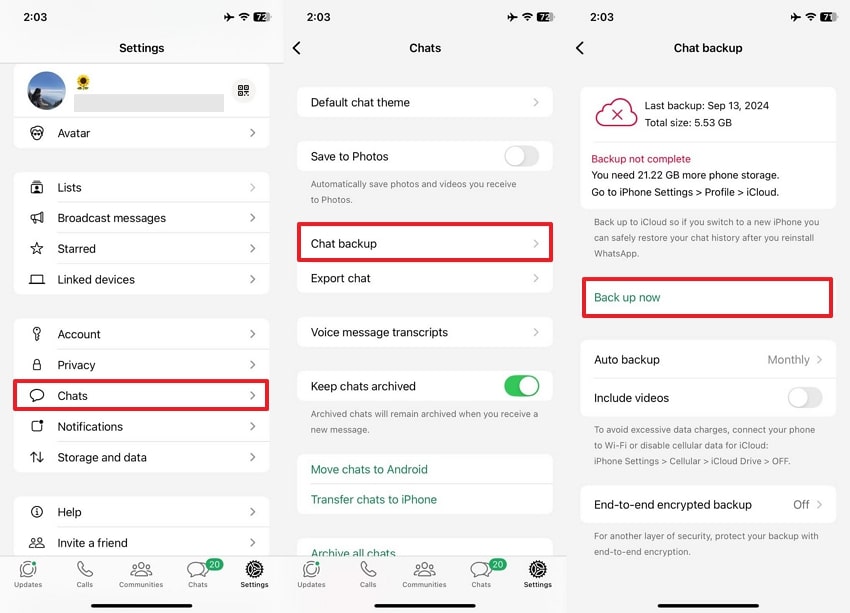
Similar to Google Drive, iPhone users have iCloud, which provides a secure way for WhatsApp transfer to a new phone. Once your iCloud backup is enabled, you can restore chat history or media in your new iPhone with the same Apple ID. It's an approach for those who prefer an easy cloud-based solution without needing cables or apps. Explore the given tutorial on how to back up and restore WhatsApp between iPhones:
Step 1. Open your old iPhone Settings > iCloud > iCloud Backup and Enable Back Up This iPhone. Also, ensure WhatsApp backup is enabled from saved to iCloud apps.
Step 2. Access WhatsApp Settings on the same device > Find Chats > Open Chat Backup > Press Backup Now. Chats and media can be set to be backed up automatically every week, month, etc.
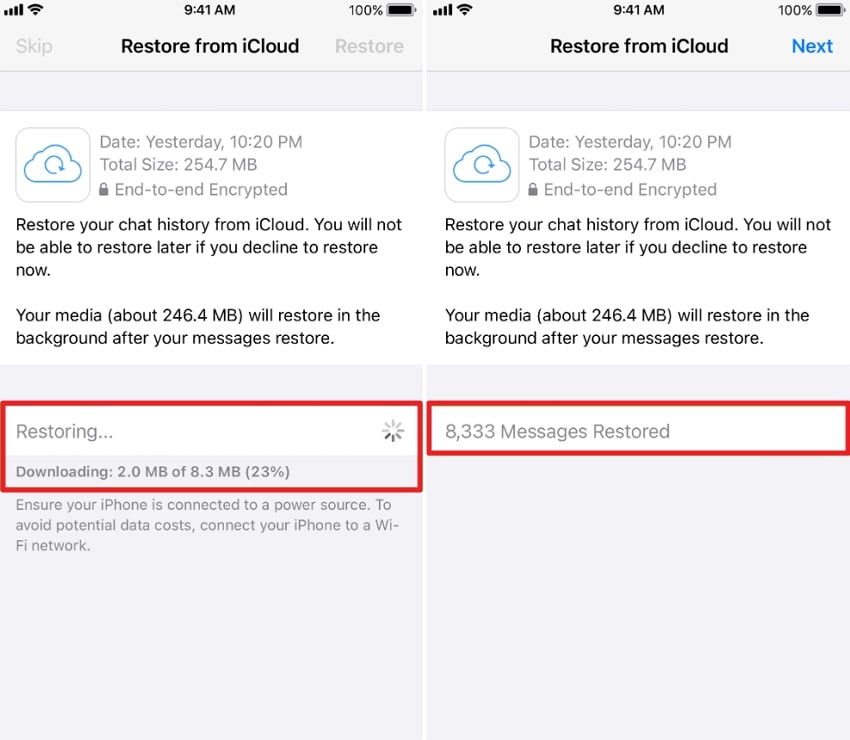
Step 3. Log in to your WhatsApp account on your new iPhone > Verify your number > Restore Chat History option for restoring.
Way 5. Manual Transfer via Local Backup (Android to Android)
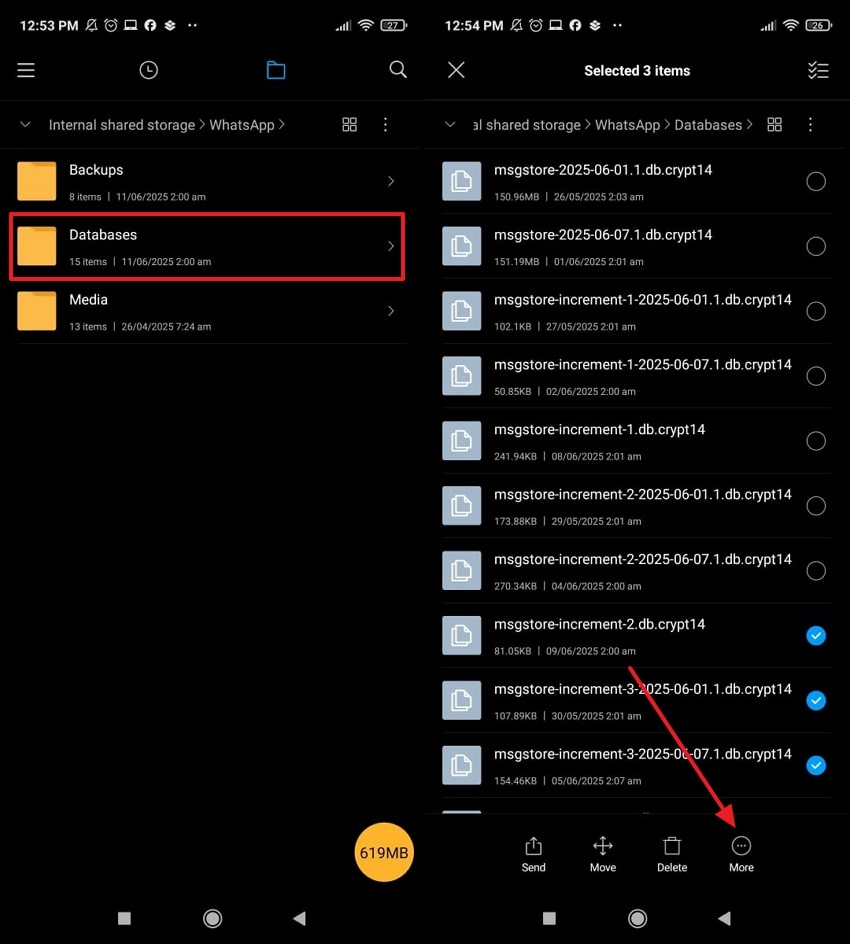
The manual transfer via local backup is a practical way to migrate WhatsApp to a new phone without relying on a cloud service. When data is saved to internal memory, you can copy the files according to the latest creation date. These files can be further sent to your new device either via USB cable or SD card into the device with the same phone number. The given manual guide elaborates on how to do so:
Instructions: Open Internal Shared Storage for WhatsApp folder > Databases > Target backup file > Move option > Choose SD Card option. Now, remove this SD card and place it in your new Android device to restore later.
Way 6. Utilize Move to iOS/Samsung Smart Switch for Transfer (Android to iPhone)
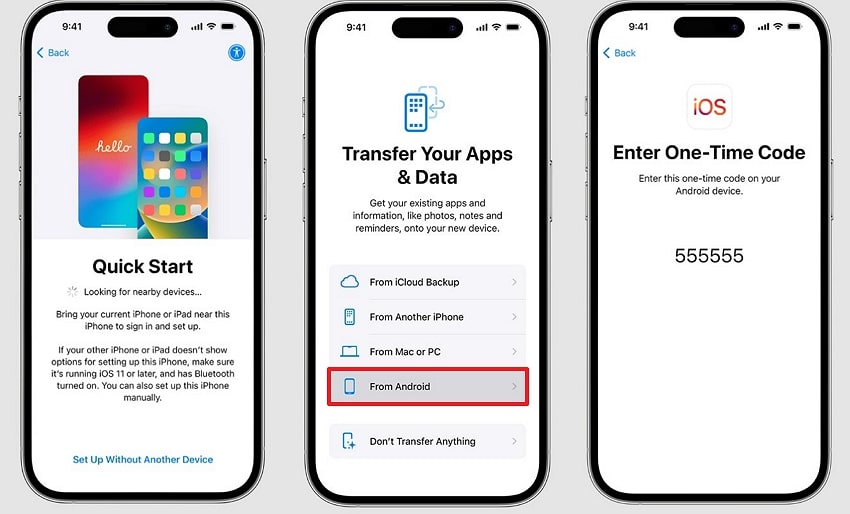
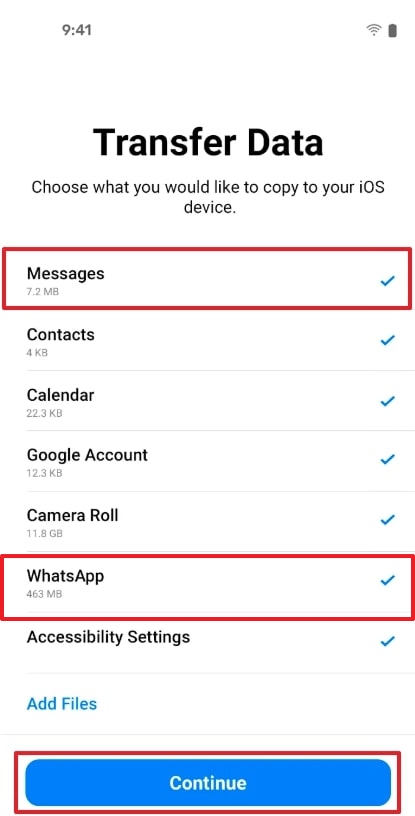
To transfer WhatsApp messages to a new phone, WhatsApp’s integration with Apple’s Move to iOS app offers a secure method. In the initial setup of your new iPhone, it creates a private Wi-Fi network to send data. Besides messages and media files, the application is capable of moving accessibility settings to the latest iPhone. To understand how it works, follow the given stepwise tutorial for the Move to iOS app:
Step 1. Deploy the app on an older phone, tap “Continue” twice, and get the code insertion screen.
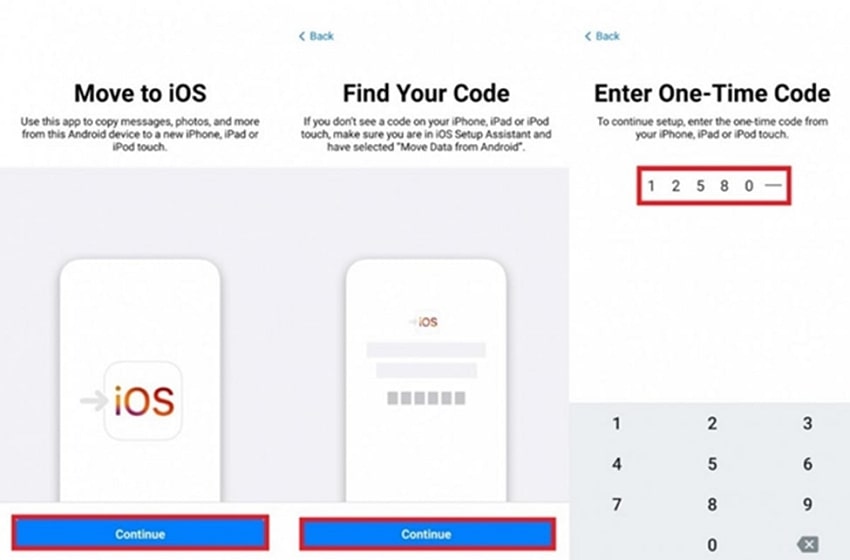
Step 2. During the setup of a new phone, specify "From Android" and type the code received into the old device.
Step 3. Select the type of data like WhatsApp and press the “Continue” button.
Way 7. Email Chat Export (Any Platform)
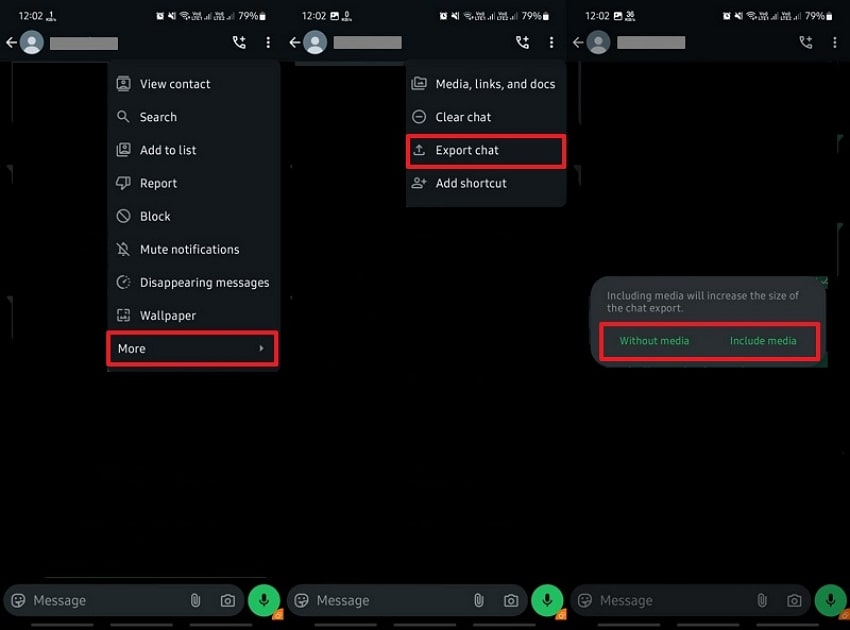
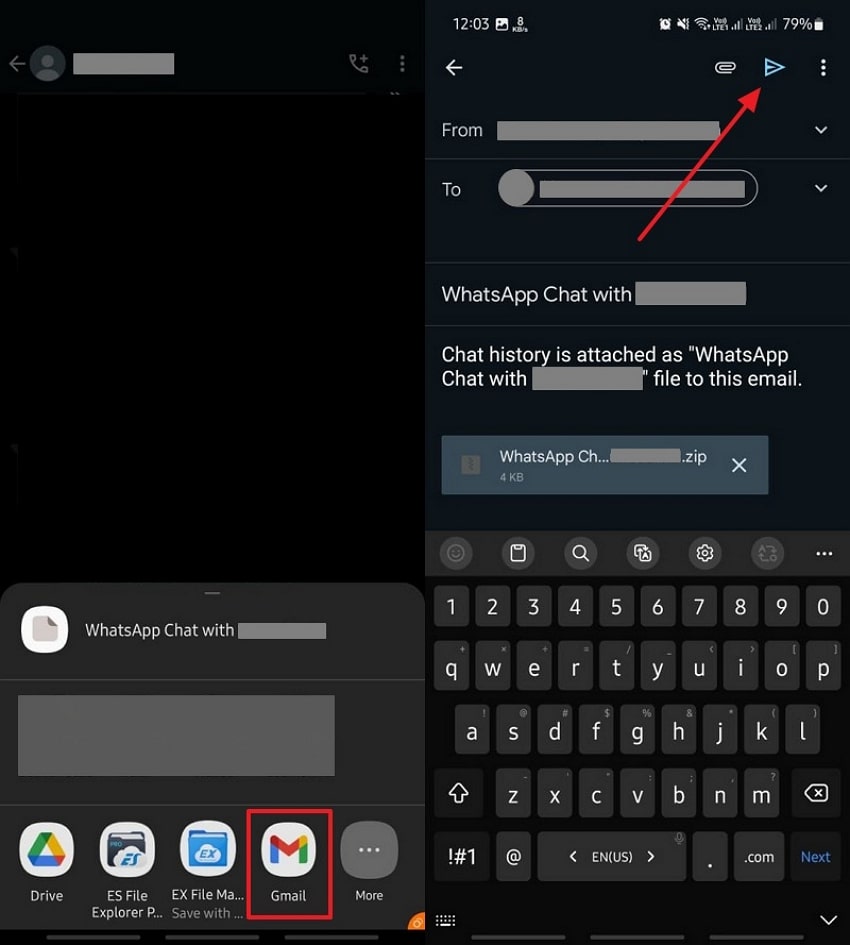
Email chat export is a universal method that works across all devices, providing an easy approach to moving WhatsApp to a new phone. Through this approach, you can choose to export chat for a specific person with and without media. The exported chat can be further shared via Gmail to your new device, which can later be saved. Learn this method through the given how-to guide for a swift transfer between different devices:
Step 1. Visit a chat on your old phone > Three Dots menu > More option > Export Chat > Choose either With Media or Without Media option.
Step 2. Select "Gmail" from the share options, enter your mailing address, and press the "Send" icon.
Way 8. Take Screenshots and Send Them Over
If you’re only concerned about preserving a specific conversation, capturing screenshots is a simple way to migrate WhatsApp to a new phone. This approach doesn’t require any backup or transfers; simply take a screenshot from your old phone and send it over via email. Although you cannot restore chats within WhatsApp, it's still a quick solution for saving messages in a readable format.
Conclusion
In conclusion, the transfer of WhatsApp data is no longer a complicated process with numerous approaches to consider. For a swift upgrade, you'll need to walk through how to transfer WhatsApp to a new phone, either it's from Android to iPhone or vice versa. When convenience is necessary, MobileTrans is most suitable not only because of its broad compatibility but also its support for different data types.