


 TL;DR:
The iPhone 18 Pro is a highly recommended upgrade for creators needing manual exposure and depth-of-field control, primarily driven by its new 48MP Fusion Main camera featuring a physical variable aperture that ranges from ƒ/1.48 to ƒ/4.0.
● Stick with the iPhone 17 Pro if telephoto reach is your priority or if you primarily shoot casual photos on automatic settings, as both models share the exact same 48MP 100mm 4x Telephoto hardware, 8x optical-quality zoom, and 18MP front camera.
● Video creators gain significant technical flexibility because the physical aperture allows for controlling incoming light to maintain desired shutter speeds outdoors without external ND filters, alongside a new capability to shoot 4K Dolby Vision Cinematic mode at 60 fps.
● Professional photographers benefit from new on-screen Pro controls for direct shutter speed and white balance adjustments, as well as the Apple Reference Image mode which captures signed sensor data to verify the authenticity of unedited original shots.
Ask AI for a summary
 ChatGPT
 Perplexity
 Gemini
 Claude
 Grok
Grok
Apple has officially unveiled the iPhone 18 Pro and iPhone 18 Pro Max, turning months of camera rumors into confirmed specifications. The biggest change is a new 48MP Fusion Main camera with variable aperture, giving users direct control over how much light enters the lens and how much of a scene stays in focus.
But not every pre-launch rumor came true. The Telephoto camera keeps the same 4x and 8x optical-quality focal lengths as the iPhone 17 Pro, while several more meaningful upgrades arrive through Pro controls, computational photography, Photographic Styles 3, and expanded video features. Here's a closer look at the official iPhone 18 Pro camera upgrades.
In this article


Part 1. iPhone 18 Pro Camera Specs at a Glance
Apple has confirmed a triple 48MP Pro Fusion camera system on both the iPhone 18 Pro and iPhone 18 Pro Max. The Main camera receives the biggest hardware upgrade, while the Ultra Wide and Telephoto cameras retain familiar focal lengths and apertures.
| Camera | iPhone 18 Pro Camera Specs | Key Feature |
| 48MP Fusion Main | 24mm, variable ƒ/1.48, ƒ/1.8, ƒ/2.8, and ƒ/4.0 | Variable aperture with automatic and manual control |
| 2x Telephoto | 48mm, 12MP optical-quality | Enabled by the Main camera sensor |
| 48MP Fusion Ultra Wide | 13mm, ƒ/2.2, 120° field of view | 48MP photos and macro photography |
| 48MP Fusion Telephoto | 100mm, 4x, ƒ/2.8 | 3D sensor-shift OIS and tetraprism design |
| 8x Telephoto | 200mm, 12MP optical-quality, ƒ/2.8 | Long-range optical-quality zoom |
| Digital Zoom | Up to 40x for photos | Same maximum photo zoom as iPhone 17 Pro |
| Front Camera | 18MP Center Stage, ƒ/1.9 | Autofocus, Center Stage, Dual Capture, and Pro controls |
Rather than increasing megapixel counts across the board, Apple has focused this generation on giving photographers more control over how images are captured.
Part 2. Variable Aperture: The Biggest iPhone 18 Pro Camera Upgrade
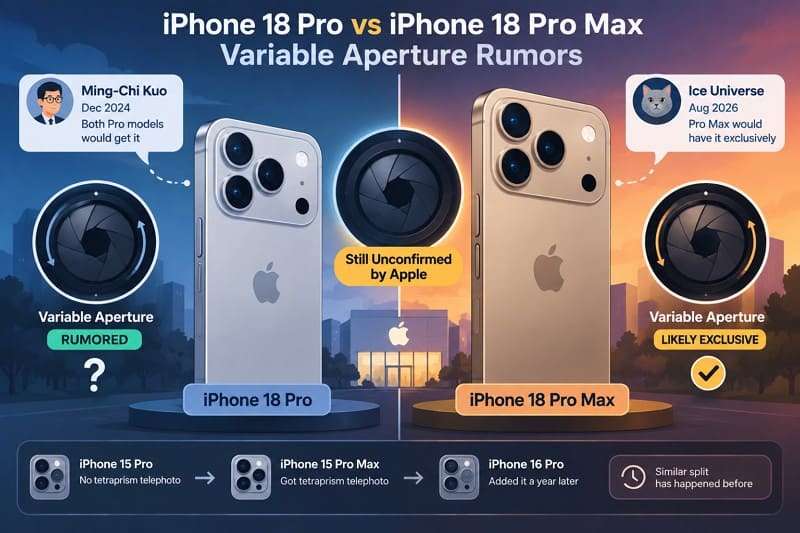
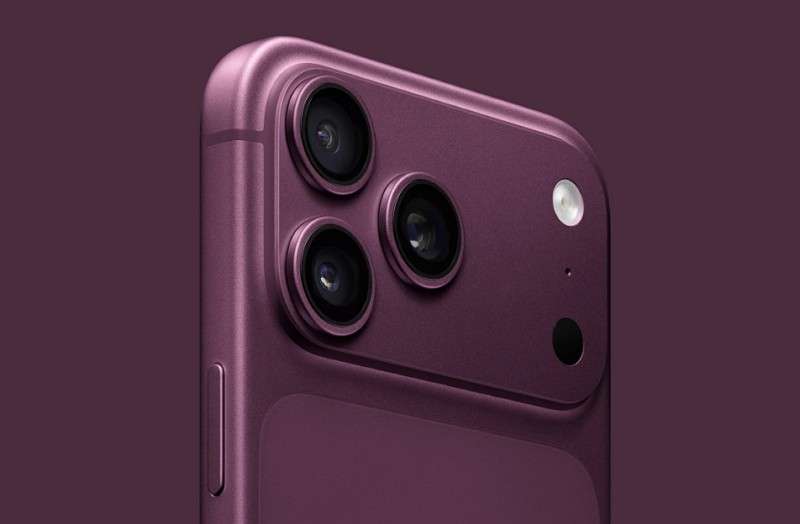
The biggest iPhone 18 Pro camera upgrade is no longer a rumor. Both the iPhone 18 Pro and iPhone 18 Pro Max feature a physical variable aperture on the 48MP Fusion Main camera.
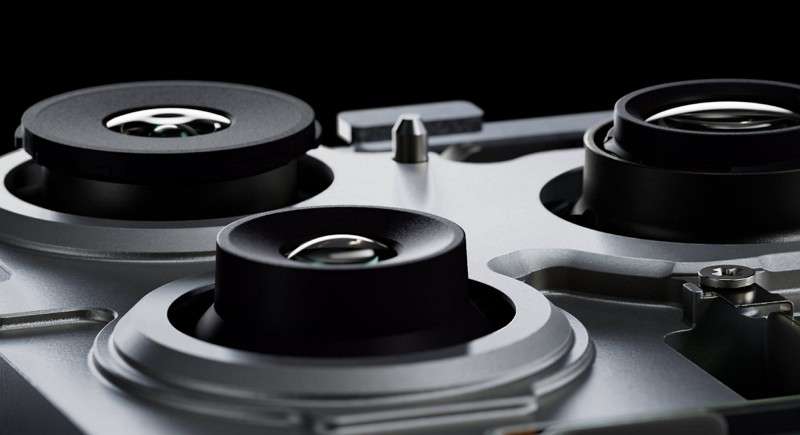
Previous Pro iPhones used a fixed Main camera aperture. The iPhone 18 Pro introduces six physical aperture blades controlled by a rotor mechanism, allowing the opening of the lens to change according to lighting conditions and desired depth of field.
How the Variable Aperture Works
The iPhone 18 Pro variable aperture supports four official aperture settings:
- ƒ/1.48: Opens widest to collect more light in darker conditions.
- ƒ/1.8: Balances light gathering and depth of field for portraits and everyday photography.
- ƒ/2.8: Narrows the opening when more of the scene needs to remain sharp.
- ƒ/4.0: Provides greater depth of field, useful for group photos and landscapes.
The Camera app can select the aperture automatically based on the scene. Photographers can also manually choose an aperture through the new Pro controls.
Better Low-Light Photography
In dark scenes, the Main camera can open to ƒ/1.48, allowing more light to reach the sensor. Apple also pairs the lens with a new Main camera sensor and updated computational imaging pipeline.
The result should be most noticeable in challenging lighting conditions, where the phone can combine a wider physical opening with computational processing to retain more detail while controlling noise.
More Natural Depth of Field
Variable aperture also changes depth of field optically. A wider aperture can create stronger natural subject separation, while a narrower aperture keeps more objects at different distances in focus.
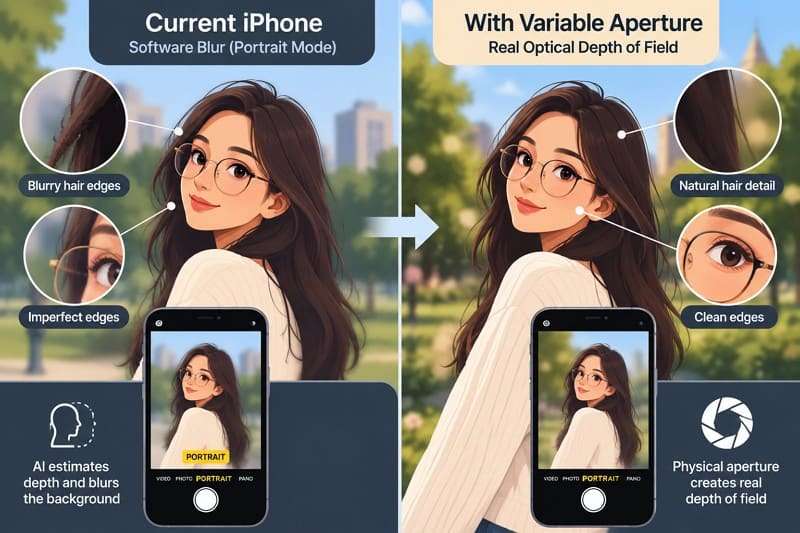
This does not replace computational Portrait mode, but it gives photographers another layer of control before software processing is applied.
For example, ƒ/1.8 can create stronger subject separation for portraits, while ƒ/4 can help keep multiple people in a group shot sharp.
Why Variable Aperture Matters for Video
The feature could be even more useful for video creators. Exposure in video is closely connected to shutter speed, and shooting outdoors with a fixed wide aperture can force creators to compensate with other settings or external ND filters.
By stopping the lens down physically, the iPhone 18 Pro gives creators another way to control incoming light while maintaining a desired shutter speed and motion characteristics.
Part 3. Other New iPhone 18 Pro Camera Features
Variable aperture gets most of the attention, but several software and imaging upgrades make the overall iPhone 18 Pro camera more flexible than its predecessor.
New Pro Camera Controls
Apple introduces a new customizable Pro controls interface in the Camera app. It provides direct access to settings that previously required more automatic processing or third-party camera apps.
Users can manually adjust:
- Lens aperture
- Shutter speed
- White balance
- Exposure using a live histogram
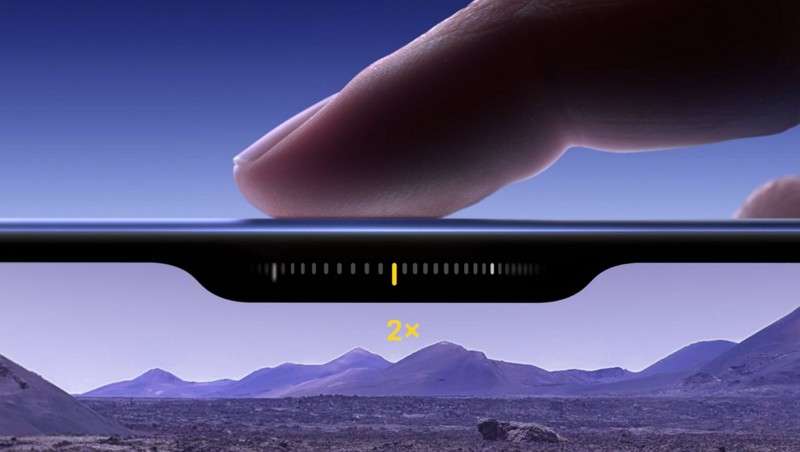
This makes the iPhone 18 Pro substantially more flexible for photographers who want more control instead of relying entirely on automatic processing.
Improved Computational Imaging
The Main camera also uses a new sensor and computational imaging pipeline. Apple says the updated system produces sharper and more detailed images while working alongside the physical variable aperture.
The A20 Pro chip also includes a Dual 16-core Neural Engine that accelerates computational photography and other on-device imaging tasks.
Photographic Styles 3
The iPhone 18 Pro introduces Photographic Styles 3, adding new texture and grain controls. These allow users to adjust not only color and tone but also the visual texture of an image.
This gives users more control over the final look while preserving Apple's computational processing and skin-tone adjustments.
Apple Reference Image
Another new camera feature is Apple Reference Image. In Reference mode, the Main camera captures signed sensor data that can be used to create an unalterable reference version of the original scene.
The reference image can then be compared with an edited version, helping photographers and viewers determine how an image has changed after capture.
This feature is particularly relevant for photojournalists, professional photographers, and other users who need a way to verify the authenticity of an original image.
New Video Features
The iPhone 18 Pro also expands Apple's professional video features:
- Cinematic mode: Up to 4K Dolby Vision at 60 fps, up from 30 fps on iPhone 17 Pro.
- Cinematic effects after capture: Effects can be applied after recording to supported video.
- 4K Dolby Vision Time-lapse: Time-lapse recording now supports higher-resolution Dolby Vision output.
- Pro controls: Aperture, shutter speed, white balance, and histogram controls are available for video.
- ProRes RAW and Apple Log 2: Professional recording formats remain available.
- Video digital zoom: Up to 24x, compared with up to 15x on iPhone 17 Pro.
Part 4. Which iPhone 18 Pro Camera Rumors Were Wrong?
Several major pre-launch reports proved accurate, especially variable aperture. However, other rumored iPhone 18 Pro camera upgrades did not appear in Apple's final specifications.
No Bigger Telephoto Aperture
Earlier reports suggested Apple might give the Telephoto camera a wider aperture to improve low-light zoom photography. That did not happen.
The iPhone 18 Pro uses a 48MP Fusion Telephoto camera with a 100mm focal length and ƒ/2.8 aperture, matching the core specification of the iPhone 17 Pro Telephoto camera.
No New 6x Optical Zoom
Rumors also suggested that the Pro Max could move to a 6x Telephoto configuration. Apple's official specifications show otherwise.
Both iPhone 18 Pro models continue to provide a 100mm 4x Telephoto and a 200mm 8x optical-quality Telephoto. Photo digital zoom remains up to 40x.
In other words, the biggest camera improvement this year is not longer Telephoto reach but greater control from the Main camera.
Front Camera Resolution Stays at 18MP
Another rumor suggested a higher-resolution selfie camera. The final iPhone 18 Pro camera specs confirm an 18MP Center Stage front camera with an ƒ/1.9 aperture, the same headline resolution as the iPhone 17 Pro.
There are still feature upgrades. The iPhone 18 Pro front camera gains Pro controls for shutter speed and white balance, a histogram, smart focus tracking, and improved low-light video at 1080p.
Camera Control Is Still Here
Before launch, reports suggested Apple might simplify the physical Camera Control hardware. Apple has not highlighted such a redesign.
Camera Control remains part of the iPhone 18 Pro and can still be used to access exposure, depth, zoom, cameras, Styles, and Tone. The more meaningful control upgrade this year comes from the new on-screen Pro controls in the Camera app.
Part 5. iPhone 18 Pro vs iPhone 17 Pro Camera: What's New?
The comparison makes one thing clear: the iPhone 18 Pro camera upgrades are concentrated around the Main camera and creative controls rather than a complete redesign of all three rear cameras.
| Camera Feature | iPhone 17 Pro | iPhone 18 Pro | Change |
| Main Camera | 48MP Fusion Main | 48MP Fusion Main with new sensor | New imaging system |
| Main Aperture | Fixed ƒ/1.78 | ƒ/1.48, ƒ/1.8, ƒ/2.8, ƒ/4.0 | Major upgrade |
| Aperture Control | Fixed | Automatic and manual | Major upgrade |
| Ultra Wide | 48MP, 13mm, ƒ/2.2 | 48MP, 13mm, ƒ/2.2 | Core specs unchanged |
| Telephoto | 48MP, 100mm 4x, ƒ/2.8 | 48MP, 100mm 4x, ƒ/2.8 | Core specs unchanged |
| Maximum Optical-Quality Zoom | 8x / 200mm | 8x / 200mm | Unchanged |
| Photo Digital Zoom | Up to 40x | Up to 40x | Unchanged |
| Front Camera | 18MP Center Stage | 18MP Center Stage | Same resolution, more controls |
| Manual Pro Controls | Limited | Aperture, shutter speed, white balance, histogram | Major upgrade |
| Cinematic Mode | Up to 4K Dolby Vision at 30 fps | Up to 4K Dolby Vision at 60 fps | Higher frame rate |
| Video Digital Zoom | Up to 15x | Up to 24x | Longer video zoom |
| Photographic Styles | Latest-generation Photographic Styles | Photographic Styles 3 with texture and grain controls | More creative control |
| Apple Reference Image | No | Yes | New authenticity feature |
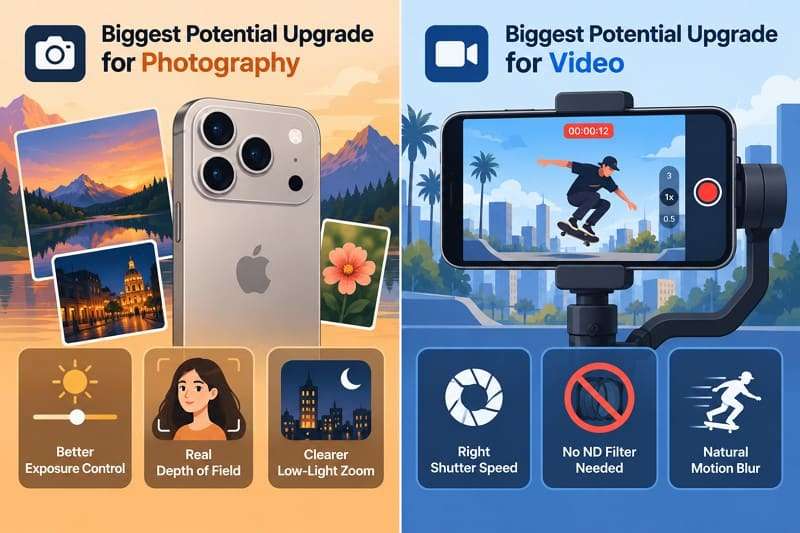
Biggest Upgrade for Photography
The clear winner is variable aperture. It changes how the camera captures light before computational processing begins, giving photographers direct control over depth of field and exposure.
The new Pro controls make that hardware more useful by allowing aperture, shutter speed, and white balance to be adjusted directly inside Apple's Camera app.
Biggest Upgrade for Video
Video creators gain more than just variable aperture. Cinematic mode now reaches 4K Dolby Vision at 60 fps, video digital zoom increases to 24x, and Pro controls give creators more direct access to exposure-related settings.
Variable aperture is especially useful here because controlling incoming light optically can make it easier to maintain the desired shutter speed in bright environments.
Will Everyday Users Notice the Difference?
For casual daytime photos, the difference may not always look dramatic. The Ultra Wide and Telephoto cameras retain the same basic specifications, and the iPhone 17 Pro already has an excellent three-camera system.
The improvement becomes more meaningful in low light, portraits, group photography, creative video, and any situation where photographers want greater control over depth of field and exposure.
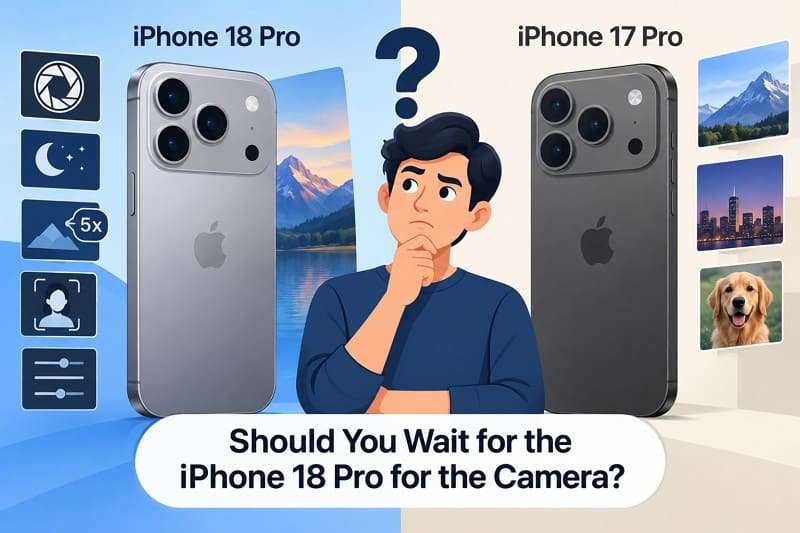
Part 6. Should You Upgrade to iPhone 18 Pro for the Camera?
The iPhone 18 Pro is a more compelling camera upgrade for creators than its unchanged megapixel counts might suggest. Instead of simply adding a longer zoom or another high-resolution sensor, Apple has focused on making the camera behave more like a traditional camera.
- Upgrade if you want more manual control: Variable aperture, shutter-speed control, white balance, and a histogram make the Camera app considerably more flexible.
- Upgrade if you shoot a lot of low-light photos: The new Main sensor and wider ƒ/1.48 setting give the camera more options in darker scenes.
- Upgrade if you create video: Variable aperture, 4K60 Cinematic mode, Pro controls, and expanded video zoom make this generation more useful for creators.
- Keep the iPhone 17 Pro if zoom is your priority: Both generations use the same 4x and 8x optical-quality Telephoto configuration.
- Keep the iPhone 17 Pro for casual photography: If you mainly use automatic settings for everyday photos, the difference may be less significant.
Bottom Line: The iPhone 18 Pro is a meaningful camera upgrade for photographers and video creators because of variable aperture and deeper manual controls. For users expecting a radically longer Telephoto zoom, however, the final hardware is much closer to the iPhone 17 Pro than early rumors suggested.
Part 7. Upgrading to iPhone 18 Pro? Transfer Data with MobileTrans
If the new iPhone 18 Pro camera upgrades convince you to switch, your existing photos and videos are likely among the most important data to bring with you. Contacts, messages, music, apps, and other files may also need to move to the new device.
MobileTrans Phone Transfer provides a desktop-based way to transfer supported data from an old Android phone or iPhone to the iPhone 18 Pro. It works across thousands of iOS and Android devices and provides an alternative when Apple's setup-based migration methods do not fit your situation.




How to Transfer Data to iPhone 18 Pro with MobileTrans
Follow these steps to transfer supported data to your new iPhone 18 Pro:
Step 1. Launch MobileTrans and go to Phone Transfer > Phone to Phone. Then connect your old phone and iPhone 18 Pro to the computer.
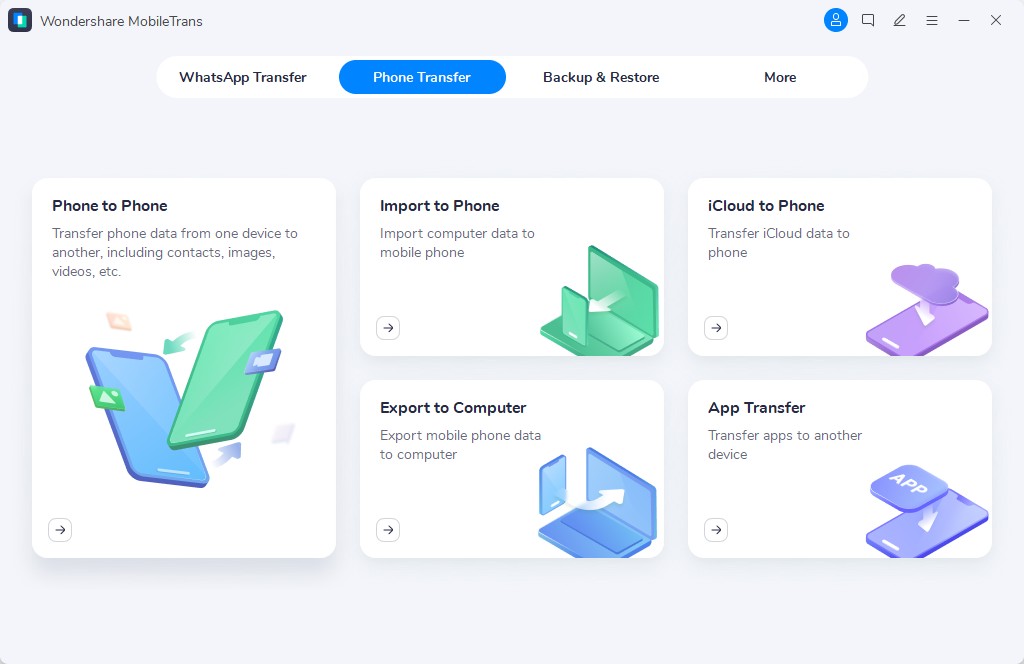
Step 2. Make sure the old device appears as the source and the iPhone 18 Pro as the destination. Use Flip if necessary.
Step 3. Select the supported data types you want to transfer and click Start. Keep both devices connected until the transfer is complete.
Part 8. Conclusion
The biggest iPhone 18 Pro camera upgrade is now official: both Pro models receive a 48MP Fusion Main camera with variable aperture. Its four aperture settings give users more control over low-light photography, depth of field, exposure, and video recording.
Apple also adds Pro controls, an improved computational imaging pipeline, Photographic Styles 3, Apple Reference Image, and expanded video capabilities. On the other hand, the Ultra Wide, Telephoto, 8x optical-quality zoom, and 18MP front-camera resolution remain largely familiar.
If these camera improvements make the iPhone 18 Pro your next phone, MobileTrans can help move your photos, videos, contacts, messages, and other supported data to the new device.



FAQs
-
Does the iPhone 18 Pro have variable aperture?
Yes. Both the iPhone 18 Pro and iPhone 18 Pro Max have a 48MP Fusion Main camera with variable aperture. It supports ƒ/1.48, ƒ/1.8, ƒ/2.8, and ƒ/4.0 settings.
-
What are the iPhone 18 Pro camera specs?
The iPhone 18 Pro has a 48MP Fusion Main camera with variable aperture, a 48MP Ultra Wide camera, a 48MP 4x Telephoto camera, an 8x optical-quality Telephoto option, and an 18MP Center Stage front camera.
-
Does the iPhone 18 Pro have better zoom than the iPhone 17 Pro?
Not for still photography. Both models offer a 4x Telephoto camera, 8x optical-quality zoom, and up to 40x digital zoom. However, video digital zoom increases from up to 15x on iPhone 17 Pro to up to 24x on iPhone 18 Pro.
-
What is the biggest iPhone 18 Pro camera upgrade?
The biggest hardware upgrade is the variable-aperture Main camera. It physically adjusts the lens opening to control incoming light and depth of field, while the new Pro controls allow users to manually select aperture, shutter speed, and white balance.
-
Is the iPhone 18 Pro Telephoto camera better than the iPhone 17 Pro?
The core Telephoto hardware is very similar. Both use a 48MP 100mm 4x Telephoto camera with an ƒ/2.8 aperture and provide a 200mm 8x optical-quality option. Earlier rumors of a wider Telephoto aperture or new 6x configuration were not confirmed.
-
Does the iPhone 18 Pro have a new front camera?
It still uses an 18MP Center Stage front camera with an ƒ/1.9 aperture. New capabilities include Pro controls, a histogram, smart focus tracking, and improved low-light video.
-
Is the iPhone 18 Pro camera worth upgrading for?
It is most worthwhile for photographers and video creators who will use variable aperture, manual Pro controls, improved low-light performance, and the upgraded video features. Users mainly interested in longer Telephoto zoom will see a smaller change from the iPhone 17 Pro.